Blog

Cat-Safe Christmas

* Adapted from International Cat Care

Most of us look forward to the festive period; the food, the guests, the tree and decorations. However, for cats, Christmas may be a time of stress and risk of injury. As a species they enjoy routine and are sensitive to changes in their environment, making the celebrations challenging. In addition, the season means certain toxic plants and food may be accessible to curious cats. At International Cat Care we have consulted our veterinary members to ask them what injuries they see at this time of year. Based on this information and with the input of the Veterinary Poisons Information Service (VPIS) this article offers advice on what to keep out of reach and what to do to minimise the disruption to keep our cats happy this Christmas.

Poisonous pants and food

  • Poinsettia, mistletoe, holly, ivy and Christmas cherry can cause a tummy upset and should be kept away from inquisitive cats.
  • Chocolate is not just toxic to dogs, it is also toxic to cats, although the amount a cat needs to eat to make them ill is a lot higher than for dogs. Signs of chocolate poisoning including being sick and passing diarrhoea, drinking a lot, appearing drunk, trembling or even having a fit.
  • Similarly, grapes and raisins, known for causing kidney damage in dogs, may affect cats but poisoning is much less common.
  • A little left-over turkey will be enjoyed by the majority of cats without harm, excessive treats and human food could make a cat poorly so do try and stick to their normal feeding routine this time of year; they won’t know they are missing out!
  • Another hazard can be cooked poultry bones – they are hard for cats to digest and can get stuck in the digestive system so make sure your cats can’t raid the bin after the Christmas lunch.

Christmas decorations

  • Be careful with candles! As elevated locations are still accessible to most cats, candles should be kept where you can keep an eye on them.
  • Keep your cat away from tinsel, lametta (the long decorative strips of tinsel), ribbons and string (around meat or used to hang decorations).
  • Many cat owners have had the experience of their cat climbing the Christmas tree and it falling over. (My childhood cat did this one year!) Your cat can get injured during the fall, but is more likely to get injured by pieces of glass from broken baubles.
    Dirk loves the shiny baubles so I put matt ones on the lower branches of my tree as he’s less likely to bat those.
  • Chewing lights and wires can be a problem for some cats, especially for nosy kittens.
How to make Christmas less stressful for cats

This time of year means lots of changes to a home, and for cats who often thrive on predictability, routine and the perceived safety of their territory (their home and garden), this can be distressing. The furniture is often moved around to accommodate extra guests, the tree is brought in, lights and decorations are put up, music is played, all making their home look, sound and smell different.  In addition, unfamiliar people, and worse still unfamiliar dogs may visit the house or even stay for several days, again at variable times, interrupting the normal routine. In order to minimise distress during this season consider the following:

  • Ensure your cat has several safe and comfortable places to hide and get away from the noise and hustle and bustle. A cardboard box or igloo bed above the wardrobe or under the bed can provide security. If new beds are added to the home at this time, make them smell familiar by adding bedding already used by your cat.
  • Advise visitors not to approach the cat if it is in its bed, but only to stroke the cat if it initiates contact. Visiting children may be keen to see and cuddle the cat but gentle stroking on the cat’s initiation must be insisted upon.
  • Guests can be given cat treats and toys to help teach the cat positive associations with the new people.
  • Ensure there is always an open door to allow the cat to get away from any noisy parties or dinners to a quieter part of the home.
  • Consider plugging in a ‘Feliway’ diffuser into the room the cats spends most time several days before the festivities begin. This product (available from your vet) contains feline pheromones which can help the cat feel more secure. Ensure it is switched on continually throughout the festive season.
  • If visitors are sleeping in one of the rooms the cat usually uses, for example, for sleeping, eating or toileting, be sure to provide the required resources (beds, food or litter tray) in other quieter parts of the house and ideally, before the visitors arrive so that changes occur gradually and the cat is comfortable with the new location.
  • If the cat’s litter tray is positioned in a place that will mean more people traffic or noise during the Christmas period, it is good practice to provide an additional litter tray in a quieter part of the home.
  • If the cat is particularly sound sensitive, avoid crackers and party poppers.
  • If a dog is visiting it may be helpful to restrict its access to the cats retreat areas using for example baby gates on the stairs.

Top Tips for Keeping Your Pet’s Heart Healthy

* From my partners at katzenworld.co.uk

The heart is one of the most important organs in the body, not only for humans, but for our furry family members too. It’s therefore crucial to keep it strong and healthy – anything that stops the heart from functioning as normal, such as changes in size, shape or rhythm, can cause problems.

PDSA Vet Nurse, Nina Downing, said “Heart problems can be fairly common and cause a wide range of symptoms – some animals can live with a heart condition for years with minimal impact on their life, while others may have severe, life-threatening symptoms. There are several things you can do to support the heart health of your four-legged friend.

Watching out for symptoms 

“There are important signs of heart disease to look out for in pets which, sadly, may worsen over time. While heart disease can’t be cured, there are treatments which can help to manage your furry family member’s symptoms and slow the progression of the disease. Things to look out for include your pet stopping or slowing down while exercising, breathing faster than normal when they are sleeping, taking a while to catch their breath after exercise, low energy, panting for longer or more often, coughing or, for cats in particular, breathing with an open mouth.  Pets struggling with a heart condition may also collapse.

Maintaining a healthy weight 

“If your furry family member is carrying extra weight, their heart has to work harder, which adds a lot of strain. Making small changes, such as weighing out their food, cutting back on unhealthy treats, and not giving in to puppy dog eyes at the table, are small changes you can make to help them maintain a healthy weight. Talk through any concerns about your pet’s weight with your vet – they may suggest a weight clinic to help support you.

Getting enough exercise 

“Exercise is a key part in keeping your pet’s heart healthy. Making sure your pooch is going for daily walks, suitable for their size, weight, and fitness ability, is really important. In between walks, have fun and play games together to help keep dogs moving.

“Cats enjoy playtime too – even if your cat is active and enjoys roaming outdoors, they will still enjoy special time with you, which will motivate them to exercise, and it’s great for bonding. If they are slightly overweight or more reluctant to move around, short play sessions are a great way to introduce a new exercise regime. You can increase the length of activities, as your cat gets fitter and more enthusiastic.

“Engaging your cat with toys, such as balls, teaser toys, wind-up chase toys, will also encourage their natural hunting instincts.

Regular vet checks  

“Catching heart problems early can make a big difference to your furry family member’s long-term health. Regular check-ups with the vet, where they can listen to your pet’s heart, can help pick up a problem before it develops.

“If you are concerned about your pet’s health, or they display any worrying symptoms between check-ups, always book an appointment so your vet can offer advice and treatment to keep your pet happy and healthy.”

From the Life of a Cat Sitter

As you may have read before, I also work as a cat sitter.

People ask me whether I just feed and clean litter trays all day. Well, yes and no. I mean I do feed cats and clean litter trays, but there’s much more to it.
In this series of posts I share some anecdotes from my life as a cat sitter. I promise these stories are all true, though the cat’s names have sometimes been changed to protect their identity 😉

Today: the cat version of Eastenders

Cats are sometimes quite literally the talk of the neighbourhood!

Jinxy is one such example. She is quite a vocal cat, always meowing for attention.

I was looking after her when I received a text from a friend who lives in the same street. The neighbours had been chatting about a cat that seemed lost and was meowing a lot. My friend wondered if I knew the cat. I said, yes that’s Jinxy and she’s not lost and she is also being fed and cuddled.

Well, the neighbours weren’t too sure as she stayed in a garden at the end of the road for quote a long time and was very vocal (did I mention she’s a chatty one?)

I’ve known Jinxy for several years and she was fine when I saw her on the morning, but still. Things happen so I thought it better to go round and check on her on my way home.

Sure enough when I arrived Jinxy was no longer on the garden at the end of the road, but people thought she’d gone into someone else’s garden. No, not there either. I went to Jinxy’s home and guess who was not lost after all? She was quite happily snoozing in her own home.

She’s been the talk of the neighbourhood on various occasions since then. Somehow I suspect she’s loving the attention…

Guide to a Cat’s Vision

* Originally written by William O’Brien for ProtectaPet

One of the first features you notice on a cat is their dazzling eyes. Not only the gorgeous colours, but the way they use them. When you see your cat trying to hunt something down, whether that be prey or a toy you are playing with, it is clear that a cat has a quality of vision that allows it to be a successfully stealthy animal. 

The quality of the eyesight of cats has been widely discussed and over time, thanks to science, we know more and more about if they can distinguish between different colours, how well they can see and the differences between the eyesight of a cat and a human.  

Can Cats See Colour?

It used to be widely believed that our feline friends are colour blind, only being able to see the world in black and white. Over the years, this theory has been proven wrong by scientists and we now know much more about what colours cats are able to detect with their striking eyes. 

There are two different types of colour receptors (cones and rods)  found within the eyes of both cats and humans. The cone receptors are linked to what we can see in the daytime and how we perceive the colours around us. The rod receptors are associated with what we can see in the dark and also our peripheral vision. Cats possess a larger amount  of rod receptors and a lower amount of cone receptors whereas humans are the opposite way round. This is why humans can’t see as well in the dark but can recognise and detect colours much better than cats.

The major difference between cats and humans is that we have three cone receptors, whereas cats have two. This is why cats won’t be able to see the world as vivid and clear as we can, however, this doesn’t mean that they are completely colour blind. The main colours that cats see is a range of blues and yellows, as well as some greens (along with white, black and grey). 

The colours that cats struggle to register are found within the orange-red spectrum, this was discovered through certain food-reward related tests which opened our eyes to what cats can and can’t see. 

What are the advantages of a cat’s vision? 

Although we may have one more cone receptor than cats do, they have more rod receptors within their eyes which makes them have excellent night vision. Cats have incredibly intelligent constructed eyes, and they are able to adapt to low light settings in a plethora of different ways. 

If you’d like to know more, check out this article about the superior night vision of a cat.

They also have a wider field of view than humans, we have a peripheral vision of 180 degrees whereas cats can see up to a 200 degree view. 

This makes them excellent hunters and of course, especially at night time. So although they may not see the vibrant array of colours that our world has to offer, they have plenty of other advantages and features related to their vision that show that they are an incredibly successful species. 

No tummy rubs, thank you

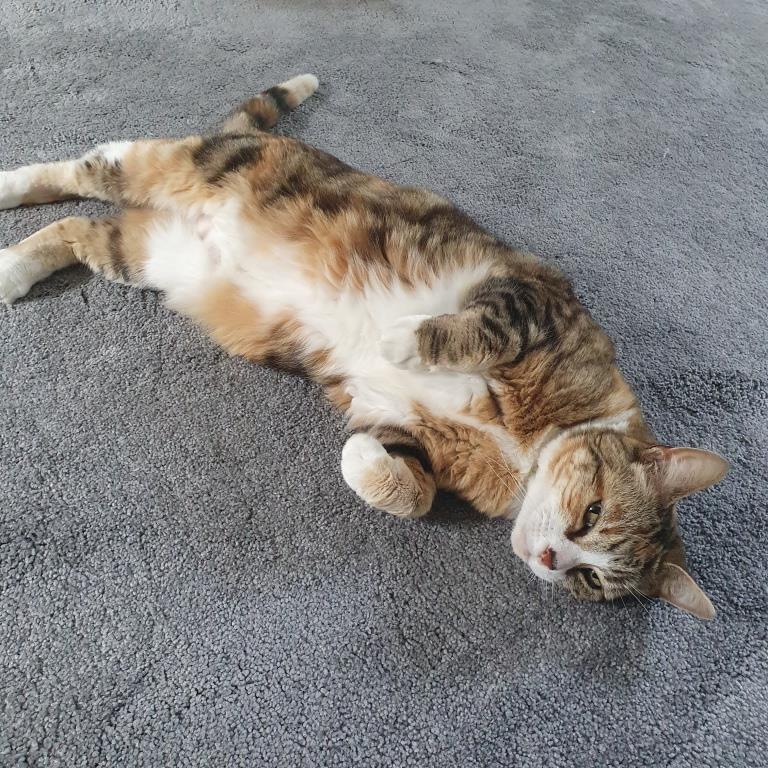
Research by Finka et al (2022) has demonstrated that many ‘cat people’ tend to pet their cats in areas the cat does not like. Their tummy being one such example. I know a cat’s tummy is soft and it is tempting to give them a tummy rub, but the vast majority of cats do not like this and will scratch you. When they lie on their backs it is a sign of trust, not an invitation to pet them. In fact, petting the tummy could be perceived as a betrayal of that trust.

From the researchers:

“Tactile interactions with cats are considered to have therapeutic benefits to humans and are increasingly included within interventional contexts to improve human wellbeing. However, cats are not considered an inherently social or highly tactile species and may have specific preferences for the ways in which they like to be touched and interacted with. Despite this, the common occurrence of human-directed aggression during interactions suggests humans’ understanding of cat behaviour and appropriate styles of interactions with cats may be limited. To address this, in a recent study, we incorporated expert understanding of ‘best practice’ styles of interactions with cats into an educational intervention for humans to use during unstructured social interactions with cats. By encouraging humans to engage in styles of interactions with cats which provided the cat with greater levels of autonomy and also emphasised focusing on the cat’s behaviour and comfort, cats responded with increased human-directed affiliative and positively-valanced behaviour, in addition to decreased rates of human-directed aggression and signs of negative affect.”