Bengal Cat Profile: Everything You Need To Know About Bengals

* Originally published by ProtectaPet

History of the Bengal

“In 1963, Jean S. Mill crossed the domestic cat with the Asian Leopard Cat, a spotted, five to twelve pound, shy non-domestic cat species from Asia. This was the first effort to use hybrid offspring to create a breed of domestic cat with the loving nature of the best fireside tabby and the striking look of Leopards, Ocelots and Jaguars.”

Cat Fanciers Association.

It wasn’t until the 1980’s that the modern bengal cat we know and love today emerged thanks to Jean S. Mill in the United States. This newer breed then became regonised by the GCCF in 1997.

Appearance of the Bengal

The Bengal takes on many visible characteristics of it’s wild ancestors. Bengals are muscular in stature and they carry their tails low like an undomesticated cat would. Females are significantly smaller than males but both feature beautiful broad wedge-shaped heads and friendly expressions. With cheek bones to die for, the cutest whisker pads and a strong broad muzzle all contributing to their wild appearance.

The Bengal coat is short to medium and very soft. Bengals come in a wide variety of patterns and colours, one of the most popular being the “Rosetted Bengal“, where their spots are a contrasted two-toned colouring.

As well as spotted bengals, they can also have a marbled, swirly pattern.

© 2018 Laurent Jaccard

Temperament of the Bengal

If you’re looking for a companion you can pick up and stroke for hours on end then the Bengal is not for you.

Bengals can be quite mischievous and they love to play. They need lots of toys and entertainment to keep their intelligent brains occupied. Bengal cats have a good set of lungs and they love to be vocal. You’ll be told if they’re hungry, if they’re not happy with the state of their litter tray or anything else that might not be pleasing them. They can be quite fussy and they are not shy in conveying their feelings through meows.

Bengals Form Close Bonds

While they are vocal and love to play, Bengals are very affectionate. Playing with your cat will help to form a close bond but don’t be surprised if they select one of the family to form an extra special friendship with.

Many people think Bengals are more aggressive than other breeds, but this is false. Bengals are the same as other domestic breeds. They need to be socialised from a young age in just the same way as other cats to avoid behavioural problems.

Are You Thinking of Getting a Cat? Questions to Ask Yourself

* Adapted from katzenworld.co.uk

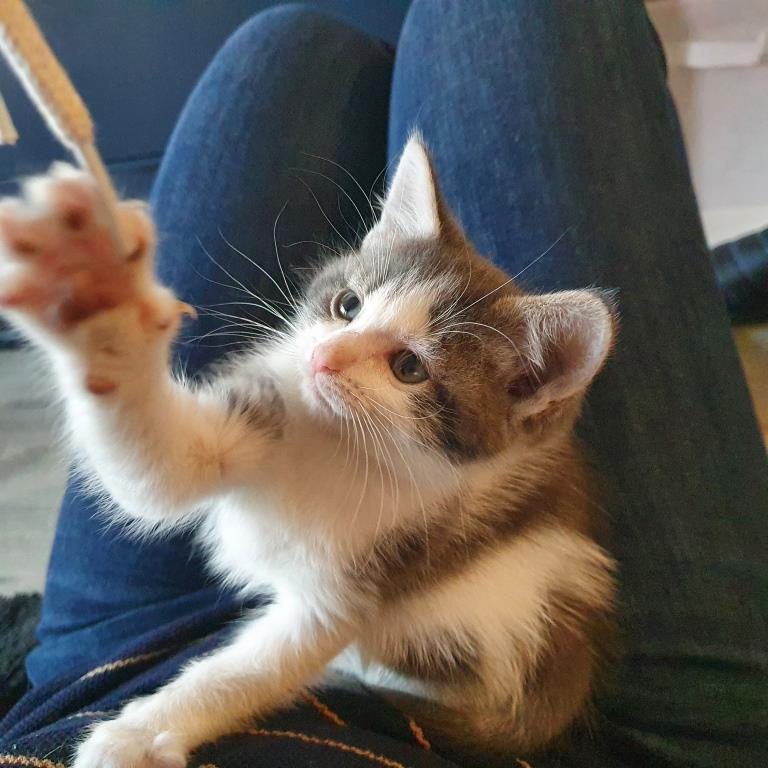
Cats are wonderful companions – just being around them is beneficial for both your physical and mental health. Stroking a cat causes your brain to release serotonin and dopamine, which helps you to feel more relaxed. Cats are also relatively low maintenance compared to other pets, although they do still need care and attention. It’s important to do your research and evaluate your lifestyle before committing to giving a cat a home, particularly if you’re considering a kitten as they can be more work than you’d expect.

Before getting a cat, ask yourself the following questions:

Do you have a stable home environment?

If you don’t own your own home, it may not be the best time to get a cat. Even if you’re renting and you’re lucky enough that your current place allows pets, it’s still risky. Renting can be unpredictable and you could be forced to move at any time, which is not only stressful for a cat, but it can be very difficult to find another home that accepts pets. You could then be faced with rehoming your cat which is heartbreaking for everyone.

Do you have enough space?

Many cat rescues or shelters will require that home inspections are carried out before they allow you to adopt a cat. They will typically have a list of criteria you have to meet – some common ones are having a cat flap, living away from any busy roads and having enough space for a cat to explore.

If you live in a small flat or apartment, you’ll need to ensure that you’re getting a breed that will be happy living indoors and doesn’t require much space to run around. This really varies depending on the cat, so it’s important to do your research.

Do you have enough time?

Although cats don’t need to be taken on daily walks, they do still need stimulation to live a healthy life. It’s up to you whether your cat is allowed outdoors or stays indoors, but if they are indoors, they will need plenty of toys and playtime to keep them entertained.

Kittens are especially time consuming. They need a lot of attention from you and a lot of play. Make sure you have plenty of safe toys for your kitten and if your kitten would be home alone all day then consider either getting an older cat or having someone come over to play with your kitten while you are at work.

Can you afford the upkeep?

With a cat comes many new expenses – food, beds, toys and vet bills. It’s a good idea to get some rough costs for each item and add up the monthly estimate to ensure that you can afford it. Vet bills are typically one-offs and can be hard to plan for, but you can make the costs more manageable and predictable by taking advantage of pet insurance.

Does anyone in your household have allergies?

If you have any doubts about a household member having a cat allergy, we would recommend trying to visit a friend with a cat or getting tested before committing to getting a cat. Cat allergies can have quite serious implications for some people and could force you to rehome your cat should someone be allergic. You can avoid this heartbreak by finding out beforehand.

If you feel you are ready for a cat, contact a breeder or cat rescue centre to help you find a cat that is best suited to living with you. After all, it is not just about your happiness, your cay’s happiness is equally important!

Brushing your cat’s teeth

February is Pet Dental Awareness Month, an issue close to my heart as my own cat suffers from tooth resorption. All my blog posts this month will be dedicated to dental health in cats to highlight the importance of this issue. Today, I am re-posting this blog about brushing your cat’s teeth

Dental hygiene is as important for cats as people.
It helps keep your cat in great condition and prevents diseases (and a bad breath).

Still, you may feel a little unsure about brushing your cat’s teeth. I know I was a little taken aback when my vet first suggested brushing Dirk’s teeth.
He showed me ho
w to do it and – surprisingly – Dirk seemed fine with it.
However, trying it at home was a different story…   

cat brushing teeth
If only it was this easy!


When I first started I was a bit too optimistic. Having seen the vet do it made me think it wouldn’t be so difficult. Dirk was not happy about it though. I tried every other day at first but I have to admit this soon became less frequent. Until Dirk was diagnosed with a dental disease called feline resorptive lesions.

After he had two teeth removed my mind set changed. I went from ‘I’ll try’ to ‘OK, I have to do this’.

Around this time I also started with my advanced feline behaviour course and was learning about learning theory and training cats. This was the perfect opportunity to put what I’d learnt into practice!

I took small steps to get Dirk used to having his teeth brushed. Admittedly, he still doesn’t like it. He tolerates it now although we have to odd day where he doesn’t. Those days are less frequent now, I brush his teeth most days. And afterwards he gets a special reward: his favourite treat which he goes nuts for.

The basics:

20190417_175628

  • First of all, buy toothpaste for cats. Toothpaste for people is toxic for cats, so never use this. Toothpaste for cats comes in tasty flavours such as chicken. Rest assured, even though it is tasty it also contains all the enzymes needed to clean your cat’s teeth.
  • Introduce your cat to the toothpaste. Let your cat lick the toothpaste off your finger (my cat loved it!). This allows the cat to get used to the flavour and texture and they will have a positive association with the toothpaste.
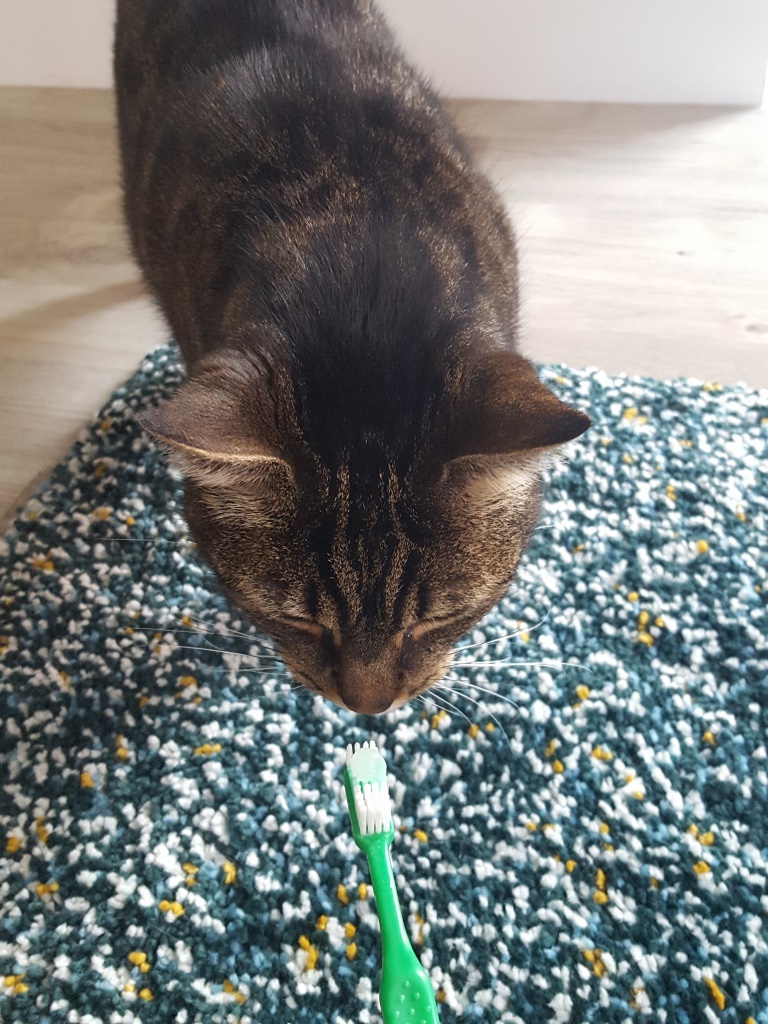
  • Once your cat is used to the toothpaste you can introduce a toothbrush, for example by letting your cat lick the toothpaste off the brush. There are several types of brushes designed for cats. Buy the one you feel most confident using.

Getting the job done:20190417_180510

  • Both you and your cat should be calm and comfortable before you start brushing your cat’s teeth.
  • Either sit behind your cat so they cannot escape or ask someone else to hold and soothe your cat.
  • Start by stroking and reassuring your cat. If you notice your cat becoming stressed, then don’t start brushing. Try again another day. If you turn this into a routine then your cat will become more relaxed over time and will allow you to brush their teeth.
  • Gently pull back your cat’s lips as shown in the picture.

What it looks like at the vet’s…        What it looks like at home
(Dirk prefers to lie down on his side)

  • Brush the teeth in slow circular motions and keep the bristles at a 45-degree angle. Brush the teeth and just beneath the gum margin, don’t brush the gums directly.
  • Brush as many teeth as the cat allows and praise your cat while doing so. Initially you may only be able to brush for about 10-15 seconds, but that’s a good start! When you’re more experienced and the cat has become more tolerant of having their teeth brushed you’ll be able to brush their teeth in about 1-2 minutes.

For more information please ask you vet or veterinary nurse.
For a video instruction, as well as additional information, please consult International Cat Care’s website.

“Suffering Dental Pain in Silence”: A Case Study

February is Pet Dental Awareness Month, an issue close to my heart as my own cat suffers from tooth resorption. All my blog posts this month will be dedicated to dental health in cats to highlight the importance of this issue.

* Adapted from katzenworld.co.uk

Skye, an 8-year old cat with a heart murmur, who came into the Bermondsey based clinic for an oral examination, is a typical case of advanced dental issues. Her gums were very inflamed and some of the teeth were broken due to ‘tooth resorption’ where the body’s own cells destroy tooth structure.

Dr. Campbell says: “Tooth resorption is a common dental disease in cats over 4 years of age and this case highlighted how much cat’s hide their pain particularly dental pain. Skye had a very healthy appetite and had no problems with eating or ‘hunting’. Her owner is a wonderfully observant and attentive carer but it is impossible to see this far back in the mouth of even the most malleable cat without a proper oral examination by your vet or nurse.”

Dr. Campbell recommended that Skye come in for a Comprehensive Oral Health Assessment and Treatment (COHAT)*. First, he performed a non-invasive cardiac ultrasound (echocardiography) and chest radiographs (x-rays) to investigate the cause of Skye’s heart murmur and to assess risks prior to a general anaesthetic. She was found to have structural changes in the left side of her heart but was considered to be low risk for an anaesthetic adverse event. Skye’s anaesthetic protocol was tailored to her conditions and designed to keep her heart rate nice and relaxed and lungs well oxygenated. She was placed into an oxygen tent for 30 minutes before her anaesthetic to allow her to take in the very rich oxygenated air.

The clinic’s nurses use a multi-parameter monitor for constant monitoring of the heart rate, body temperature, blood pressure and breathing (capnography) allowing any alterations to be made minute-by-minute. Dental nerve blocks were used, which reduce intra and post-operative pain and the amount of overall general anaesthetic required which is even better for the heart. Full mouth x-rays were taken which are essential to determine disease below the gumline and a dental chart was completed recording all details for every tooth. Skye had four teeth removed in total, and is now making a good recovery.

* Full details about COHAT available here: http://www.thelondoncatclinic.co.uk/cohats-comprehensive-oral-health-assessment-and-treatments/

Vet Warns That Cat Population is “Suffering Dental Pain in Silence”

February is Pet Dental Awareness Month, an issue close to my heart as my own cat suffers from tooth resorption. All my blog posts this month will be dedicated to dental health in cats to highlight the importance of this issue.

* Originally published by katzenworld.co.uk

Around 85% of cats aged over three suffer from some degree of dental disease, and regular brushing of the pet’s teeth can help, says a leading London-based feline vet.

Dr. Jeremy Campbell, Clinical Director at The London Cat Clinic, one of only a handful of practices in the UK that is cat-only, recommends tooth brushing together with 6-monthly to yearly dental checks to spot disease early. This can help prevent the formation of tartar, which can slow the progression of diseases such as gingivitis and periodontitis.

Dr. Campbell explains: “One thing that pet owners can do at home to help reduce the progression of dental disease in their cat is brushing the teeth regularly where possible. This isn’t easy with cats and they need to be trained from kitten-hood but it is possible.

“Owners are often under the impression that feeding 100% dry food will ‘clean’ their teeth sufficiently. However, recent studies have shown that regular dry food has little abrasive qualities, as cats tend to chew too quickly for any real impact. Any effect it has is at the tip of the tooth and most diseases in cats are at the gum level or below the gum line much higher up.”

The London Cat Clinic offers a Comprehensive Oral Health Assessment and Treatment (COHAT), including dental radiography.*

A further problem contributing to “the silent suffering”, explains Dr. Campbell, is that cats also tend to ‘hide’ dental disease from their owners, so dental disease may go undiagnosed until the animal is more likely to be in severe pain.

Symptoms include lethargy, decreased appetite, bad breath and inactivity. Left untreated, dental disease can affect the organs, causing damage to the kidney and liver.

Many pet owners are also concerned about the risks of subjecting their pet to a general anaesthetic – particularly if they have an existing medical condition.

Dr. Campbell says: “Pet owners whose cats have underlying diseases or are elderly are often reluctant to bring in their cats in for a dental examination, as they are concerned that their cat will not be a good candidate for general anaesthetic. Often, however, this is not the case. We carry out checks appropriate to their age and any existing problems to allow us to assess risks and to plan accordingly.”

He added: “Cats should ideally have their teeth examined by a vet or nurse at least once every 12 months. Cats that have had dental problems should be examined once every 3-6 months depending on their condition.

“Generally, the sooner the problem is identified, the easier and quicker it is to treat. Even if the cat’s mouth is being examined every day, dental disease will develop and gradually progress. Cats will quite often not show clinical signs until the disease is advanced, by which time many teeth may need to be extracted.”