From the Life of a Cat Sitter

Besides being a cat behaviourist I work as a cat sitter as well.

People ask me whether I just feed and clean litter trays all day. Well, yes and no. I mean I do feed cats and clean litter trays, but there’s much more to it.
In this series of posts I share some anecdotes from my life as a cat sitter. I promise these stories are all true, though the cat’s names have sometimes been changed to protect their identity 😉

Today, I’d like to share some stories about other animals visiting (or living in) the house of a client. And I’m not talking about the dead, half dead, or remains of mice the cats have brought home…

Although I actually did once encounter a mouse inside the home that was very much alive. The cat was initially very curious about a certain corner in the room, but then sat down next to me. Imagine my surprise when a mouse appeared and started walking along the wall towards the door! I decided to leave the cat to open the door so the mouse could escape. On my way back to the sofa I had to walk past the mouse, by then it had made decent progress towards the door. The terrified mouse squealed and my heart sank. I was certain the cat would come running. Actually, she stayed on the sofa and the mouse made it out the door 🙂

Cats with outdoor access are sure to bring home a surprise every now and then, but not usually while I am there. However, once Isla came walking through the cat flap carrying a bird she’d just caught!
She was so proud and made noises to announce she was on her way with prey (you’ll know what I’m talking about if your cat has ever brought home prey). And she was quick too: she’d only left the house a few minutes prior!
Now, you should know that Isla is not an only cat… Even if her brother is not a voracious hunter, he was obviously very interested in this possibly very happy meal.
As Isla came in she let go of the bird. Well, what ensued were a few minutes of craziness. Cats running, jumping and chattering, the bird flying around trying to get away and I stood in the middle of it all. Things calmed down when the bird sat down on a high shelf. I somehow managed to distract the cats and get them out of the house. I let the bird calm down for a bit and made sure the cats had left before opening the door so it could fly away and find a safer home!
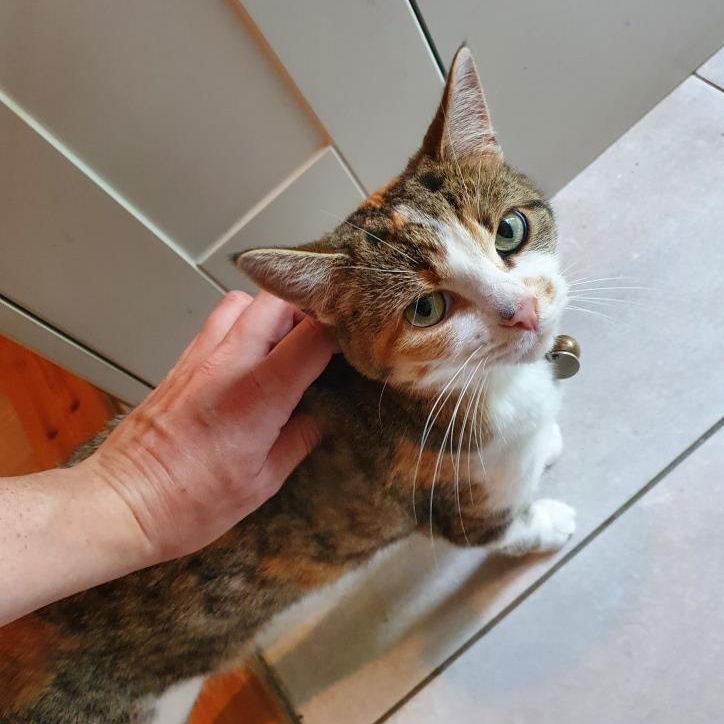
Sometimes clients adopt another cat and there is no time for me to meet the new addition before my visits start. That is all right. If I already know the house and the other cat(s) then the new cat often quickly adjusts to having me around. I was once scheduled to visit two cats I’d known for some time. The owner told me she’d recently adopted a third one, a male cat. He’d spend most of his time outdoors, but would come in for meals and to sit on the sofa. She said she’d leave a picture of him on the table so I knew what he looked like. Great!
As soon as I walked in I saw the new cat on the sofa. He lifted his head and then went back to snoozing. I was surprised that this cat was a boy, because it looked more like a girl, but then, I hadn’t seen the backside 😉
I started reading the note the client left behind and turned the page to look at the picture. Needless to say that this new cat looked nothing like the picture! Yes, it was an uninvited guest making themselves at home. As it turns out she (yes indeed) was a neighbour’s cat but she often frequented other people’s house looking for food…
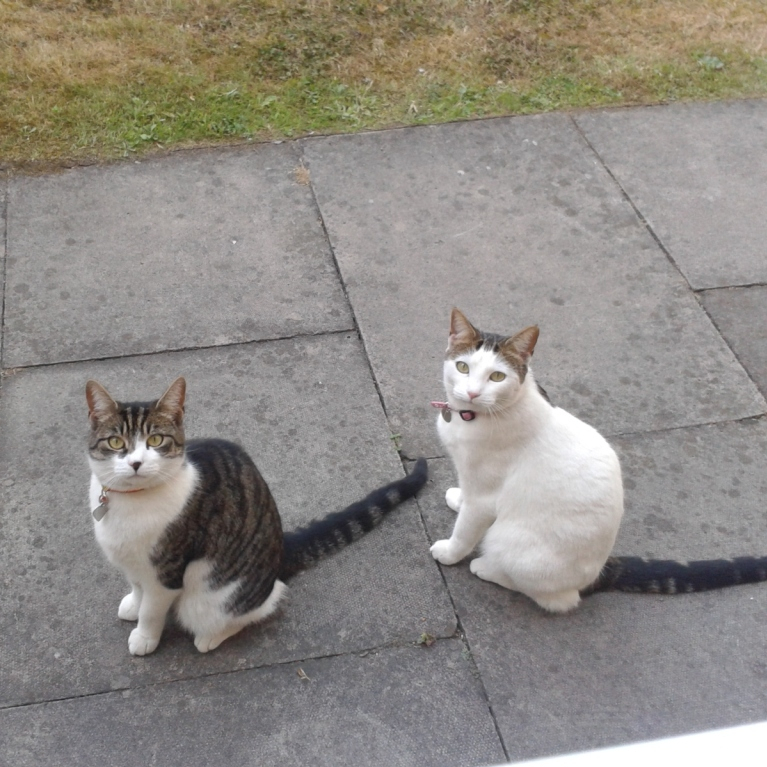
To prevent unwanted cats coming into your home, get a microchip operated catflap 😉

Moving Home With Your Pet

Adapted from katzenworld.co.uk

Moving house can be one of the most stressful experiences in life, both physically and emotionally, especially with the added complications of social distancing. So imagine how confusing this time can be for our pets, who can’t understand why all these changes are taking place.

PDSA vet Anna Ewers Clark said: “Worrying that your pet might struggle to settle into a new home can add yet another layer of stress to the moving process. But there are steps owners can take to help their pets feel more relaxed.”

“Even confident pets can be daunted by all the comings and goings ahead of moving day, so try and keep at least one room free of too much change, where they can get away and find a bit of normality. Leading up to the move, gradually place food and water bowls, litter trays, toys and beds into this room. On moving day they should then be happy to remain in one secure room for a number of hours, with regular visits to go to the toilet and for reassurance.”

“Some pets may benefit from staying elsewhere to avoid the flurry of moving-day tasks. Once you’ve had a few days to settle in and everything smells more like home, you can then introduce your pet to your new home.”

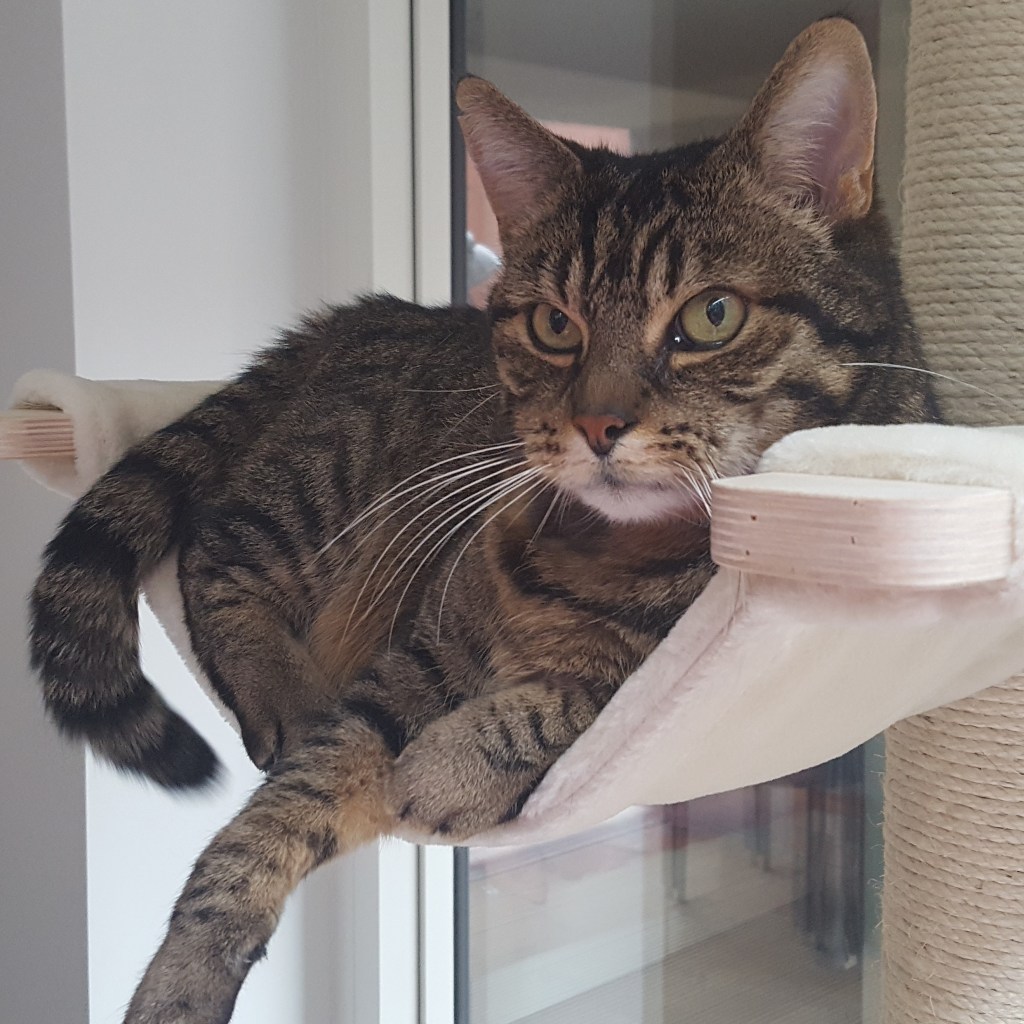
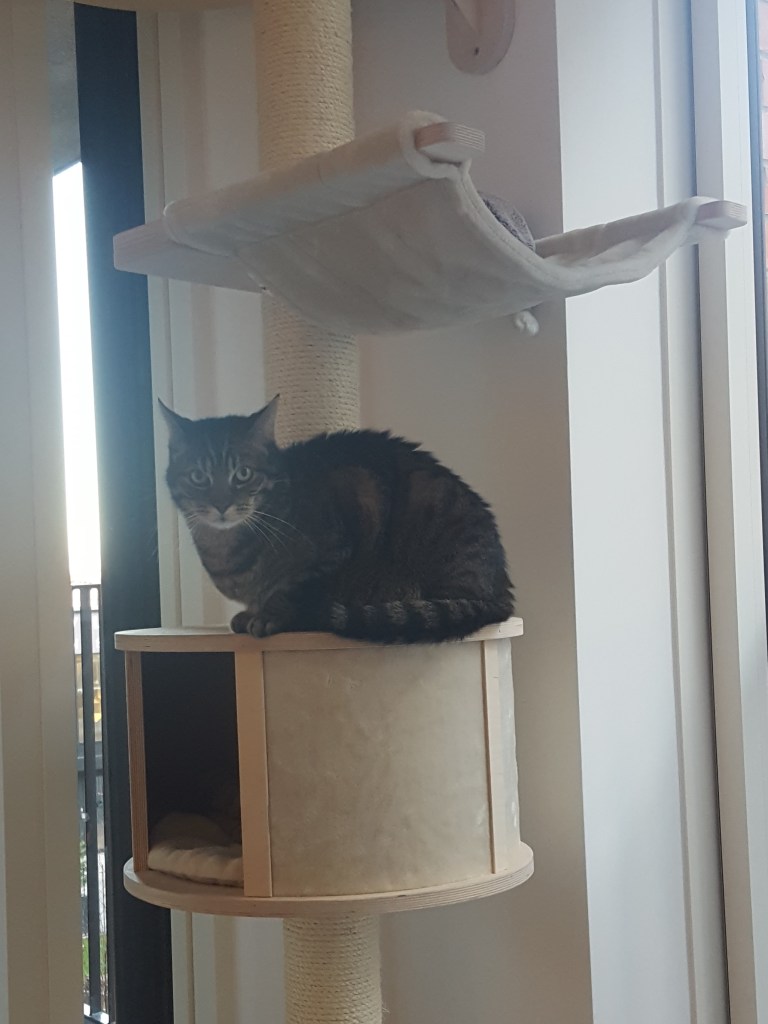
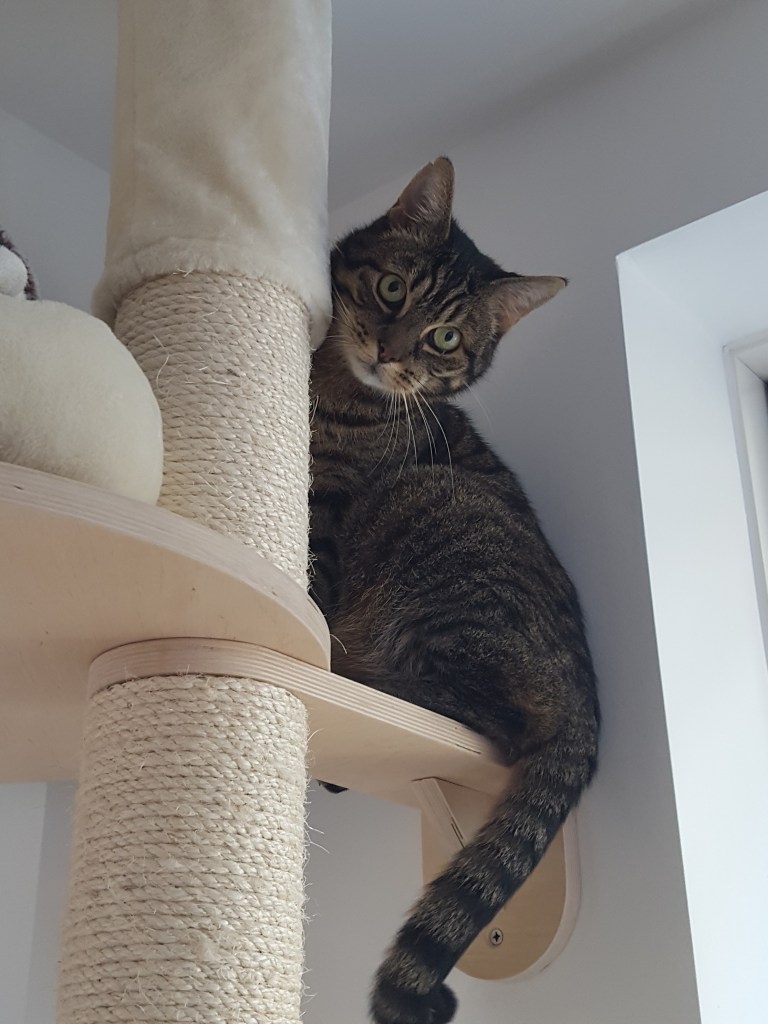
Dirk sat on top of the upright bed keeping an eye on things

There are plenty of things you can do to help your pet settle quickly. Here are some simple tips:

  • Ensure your pet’s microchip details are up-to-date to increase the chance of you being reunited with your pet should they go missing or escape during the house move.
  • If your move involves a fairly long drive in the car (or a plane journey!) talk to your vet about calming supplements. I would recommend Zylkene which I used when we moved to London and Dirk had to be in the car with us for 7 hours. Talk to your vet to discuss which supplement would be most suitable for your pet.
  • If your pet seems nervous and doesn’t want to eat, small amounts of their usual food throughout the day will be gentler on their tummy while they are feeling anxious. Some pets (mostly cats and dogs) can feel the effects of travel sickness, so if your pet is affected don’t feed them too close to travelling time especially if it’s a long journey.
  • At your new home, place some of your pet’s toys and bedding into one room with a piece of clothing that smells of you. Dogs will usually prefer for you to spend some time with them to help them settle, but most cats will be keen to explore and may prefer some time alone to investigate their new surroundings. With small pets, try to put them somewhere quiet and make sure they have their familiar cage and bedding to help them feel at home.
  • If your cat is initially nervous and hiding (under the bed for example), don’t worry too much and give your cat some space. Most cats feel more confident exploring their new home at night when everything is quiet.
  • Once they seem confident, you are all moved in and you’ve checked there no hazards for your pet like nails or wires, let them explore the rest of the home. Cats should be kept indoors for a few weeks to help them become familiar with the home, so that they know it’s their new base once they are allowed outside.
  • Your vet can recommend a diffuser such as Pet Remedy or Feliway which can help your pet feel more relaxed.

From the Life of a Cat Sitter

Besides being a cat behaviourist I work as a cat sitter as well.

People ask me whether I just feed and clean litter trays all day. Well, yes and no. I mean I do feed cats and clean litter trays, but there’s much more to it.
In this series of posts I share some anecdotes from my life as a cat sitter. I promise these stories are all true, though the cat’s names have sometimes been changed to protect their identity 😉

On a nice, sunny day many cats enjoy spending time outdoors. When cats have outdoor access via a cat flap they may decide to stay out rather than have cuddles with the cat sitter. This is England, after all. It might well rain again the following day!

However, when cats do not have outdoor access they usually come and greet us. Sometimes they are snoozing somewhere nice and cosy, but at least we see them. Although….

Some cats seem to enjoy a game of hide-and-seek. I know they are inside because they did not leave when I opened the door, but where are they??? I’m not talking about hiding under the bed, sofa, or on dining chairs, all well-known hiding spots. Some of my clients’ cats have hiding places that I still don’t know about! One meows to attract my attention and is quiet when I walk through the room looking for him. However, as soon as I leave the room he meows again. He must be having fun watching me trying to find him 😉

Another cat likes to sit inside cupboards. A telltale sign is of course an open cupboard door. Except when he opens it slightly, squeezes through and then the door closes behind them. It’s a good thing hisowtold me that’s what he does or it would have taken me ages to find him!

Some cats are so nervous around strangers that they rarely show themselves. I always feel for those cats. Luckily this is very unusual, but it does happen sometimes. Most owners know when their cats are nervous around visitors so they will warn the cat sitter before visits. All I can do is wait patiently and hope they decide to come out and this has worked – eventually – on several occasions.

Another favourite hiding place: on top of the kitchen cupboards.

If I fits I sits

We all know our cats love to squeeze themselves into impossibly small boxes. The smaller the better it seems!

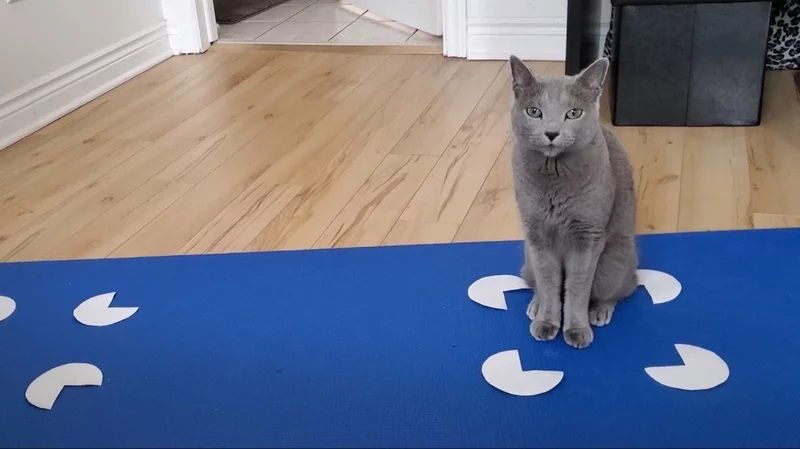
Now research by Smith et al (2021) has found that cats don’t just enjoy sitting in boxes but in “imaginary” boxes as well. Of course we do not know whether these cats actually imagined they were sitting inside a box, but the cats showed a preference for sitting inside a square, even if it was just an illusion.

How did they test this?

Cat owners were asked to test their cats at home, meaning the cats were not subjected to a test environment. This is a huge bonus because cats often do not perform well (or at all) in test environments due to stress or being unfamiliar with the environment and/or the researchers.

These cats did not know they were being tested, but their owners did. However, in order to avoid owners influencing their cat’s behaviour they were asked not to interact with their cats during the short tests. The owners were also instructed to wear sunglasses so they could not inadvertently guide their cat’s actions. Owners were also asked to record videos of their cats during these tests.

Roughly 500 owners signed up to participate, but only 30 cats completed the whole study. Whether the cats or owners gave up is unknown 😉

The participants received all the material and instructions from the researchers and were given “six randomized, counterbalanced daily stimuli to print out, prepare, and place on the floor in pairs”. There were three possible stimuli: an outline of a square, a Kanizsa illusion of a square using Pac-Man shapes or a control that had the Pac-Man shapes facing outward.

The control outline (left) and the cat sitting inside the Kanizsa illusion

The study found that cats chose to sit in the Kanizsa illusion of a square just as often as inside the actual outline of a square and sat in the control outline less frequently.

What does this mean?

As one of the researchers says, “[t]he major takeaways are that cats are susceptible to the Kanizsa illusion in a human-like way, and are most likely attracted to 2-D shapes for their contours (sides), rather than solely novelty on the floor”.

Why do cats like to sit where they fit?

Although more research is needed, I agree with Nicholas Dodman who wrote that “cats like to squeeze into small spaces where they feel much safer and more secure. Instead of being exposed to the clamor and possible danger of wide open spaces, cats prefer to huddle in smaller, more clearly delineated areas.”

How to Build the Best Cat Towers

* From my partners at katzenworld.co.uk

Building a cat tower requires doing some research and understanding your cat’s behaviour. It’s not an easy task. In fact, there may be instances where you build one, only to tear it down after you’ve seen how your cat is using it.

Here are some tips for building the best cat tower for your pet.

1. Research

It’s always a good idea to do some research on any project that you set your eyes on. Take some pictures, analyse reviews and talk to cat owners who own towers to gain some insight and advice. By researching, you can find design inspirations, determine which colours to use, and identify which structures you can add. The best cat trees are those that take your cat’s needs and behaviour into account, and also complement your home’s interior dĂ©cor.

2. Determine The Size Of Your Home

One of the most important factors when making your decision to build a cat tower is the size of your home. You need to determine how big your walls are, how tall the trees surrounding you are, as well as the buildings around you. If you build a tower that’s too small relative to your space, your cat may be more interested in climbing taller and bigger objects. If the tower is too large compared to your space, you may feel cramped up in your space, considering it will share space with your furniture. Articles that discuss pet guides and product reviews can give you more insight into these essential considerations.

3. Determine The Tower Structure

Cat towers and houses are available in a variety of sizes. Some pet owners prefer to build them in tandem with a cat fence so that the cats will have a place to go to relieve themselves.

Most cats like to climb objects, which means that the structure you’re building needs to be tall enough for your cat to climb up and down comfortably. Your cat shouldn’t need to jump from one level to another, but the tower should help your feline companion improve their climbing skills. It is a good way to teach them to trust their paws and not use their claws when trying to climb.

4. Tower Material

The material used to build the tower can determine whether your cat will enjoy the tower. Materials such as rope, reed and thatch may be irritating for some cats because their claws get stuck in the material. Other materials used to make cat towers include wood which may be wrapped in cloth. Stay away from certain fabrics like cotton, because they may quickly become torn by the constant movement of your cat.

5. Consider The Size Of Your Cat

The best cat tower is one that can effortlessly hold your cat’s weight. You don’t want your cat to topple over or for the tower to give in to the weight. This can hurt your cat as well as the space in which the tower stood. Make sure to use a material that’s strong enough to hold your cat to avoid potentially dangerous scenarios.

6. Preferred Tower Location

Where you decide to place your cat tower is largely determined by your cat’s preferred location in the house. Some cats enjoy spending time with others in the lounge area, while others seem to prefer a quiet window corner. You may decide to place a tower where you’d prefer to see your cat, but if your cat hardly spends time in your preferred locations, then he or she may not fully enjoy the tower.

7. Rebuild

If you realise that your first attempt didn’t come out as intended, don’t be shy to dismantle and rebuild. Perhaps you’ll notice that it’s wobbly when your cat is on it, though it may appear steady. You may also notice that your cat struggles to navigate the tower because they’re too big for the tower. You simply have to observe your cat and fix the tower accordingly.

Conclusion

Before building your cat tower, you need to do some research. Gather design inspirations and building tips online. Consider the size of your home, your cat’s behaviour, and the size of the tower. Place the tower in a space that your cat enjoys. If you realise that there’s something wrong with the tower, you can always dismantle and rebuild. Wobbly towers or ones that are too small for your particular cat can cause dangerous scenarios where your cat may fall or knock the tower over. Also consider the type of material that you use to build the tower.