Gus&Bella’s Mother’s Day Box of Love

* Originally written by me for katzenworld.co.uk

Gus&Bella have got a special edition box again, this time for Mother’s Day.

We will be forced to celebrate Mother’s Day socially distanced once again and 2021 seems like the perfect year to surprise every self-confessed Cat Mum, be this your partner, Mum, aunt, sister, cousin, friend, anyone! Just imagine how they would feel to receive such a special and thoughtful gift on Mother’s Day 🙂

I’m pretty sure that if cats could read, write, spend money and send things they would certainly order this box for their Cat Mums (and not solely because there is something in it – quite literally – for them too). But let’s face it, they need a helping hand from a human reading this, so just order it in the cat’s name and everybody will be happy!

As always, this box is full of amazing things for both human and cat (you will definitely skyrocket in the ranking of the cat’s favourite people once they realise it came from you).

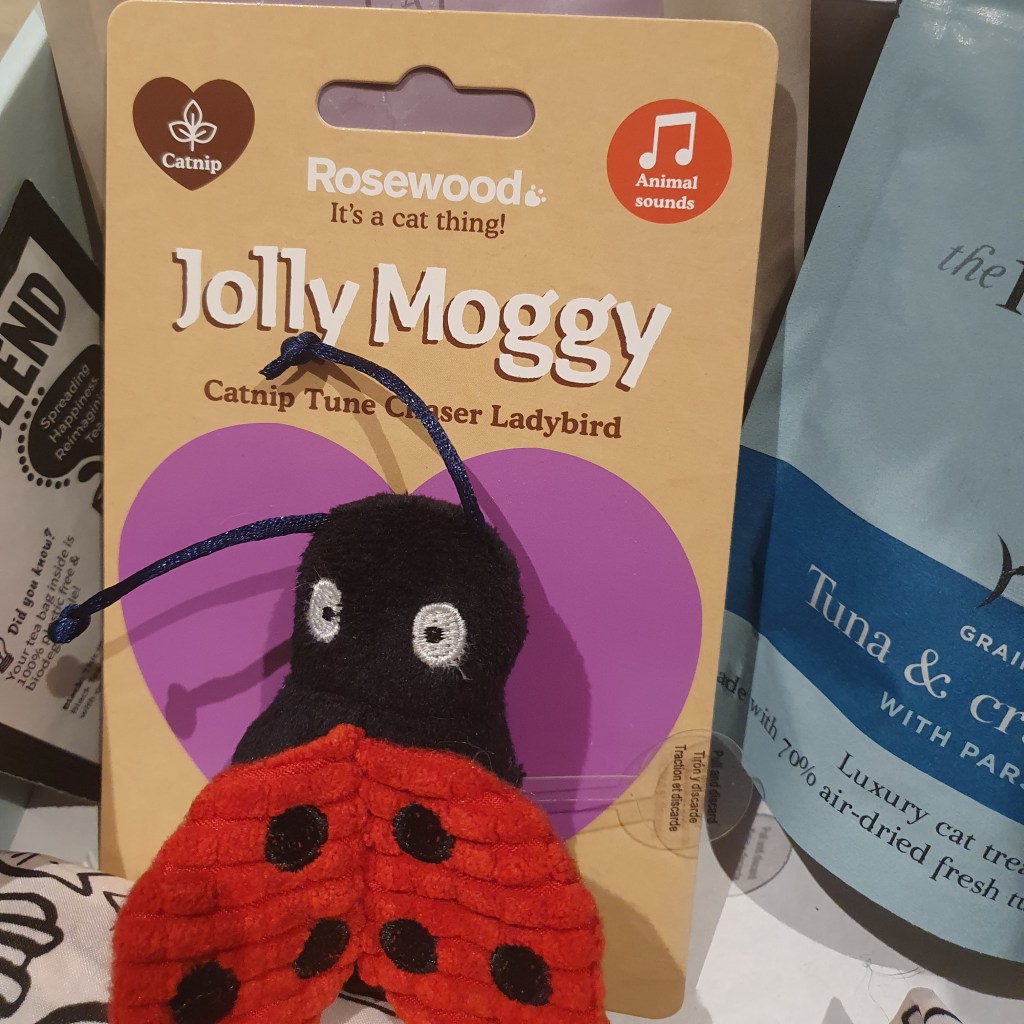
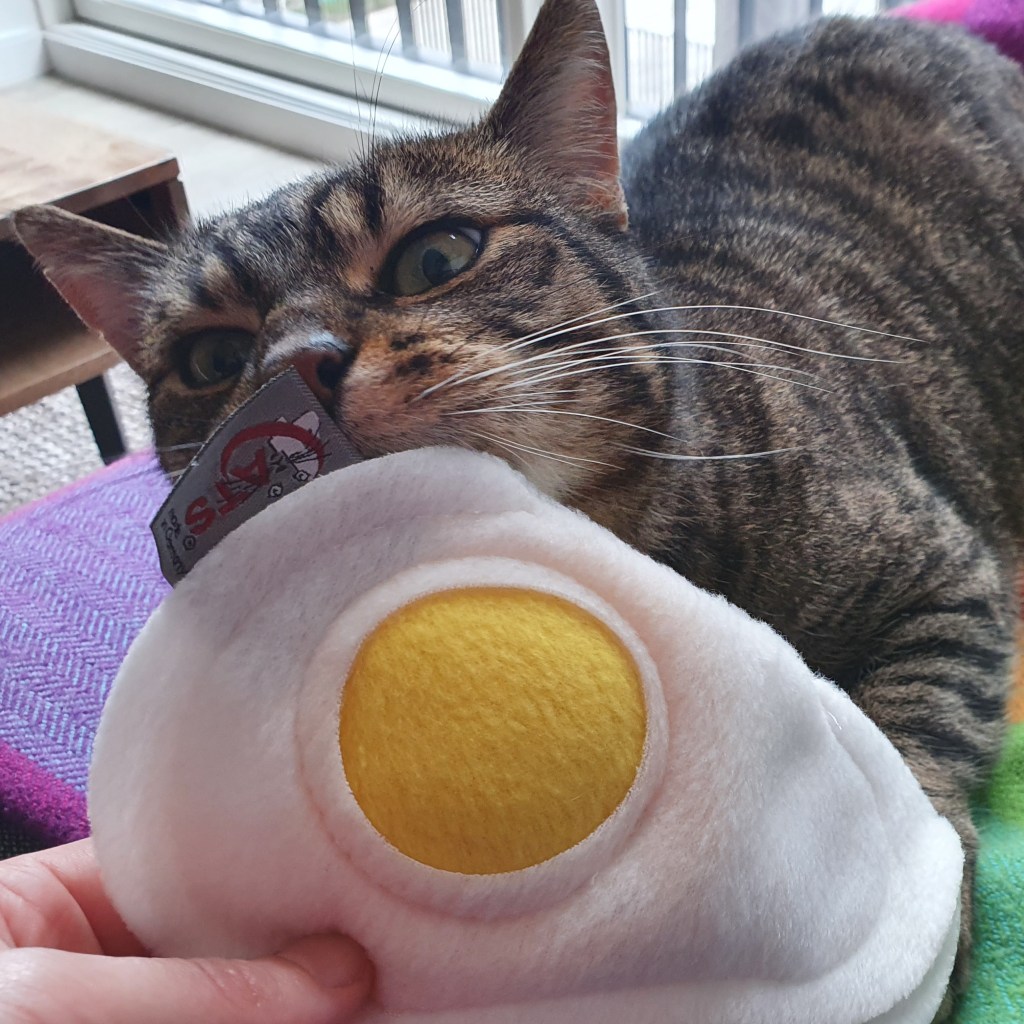
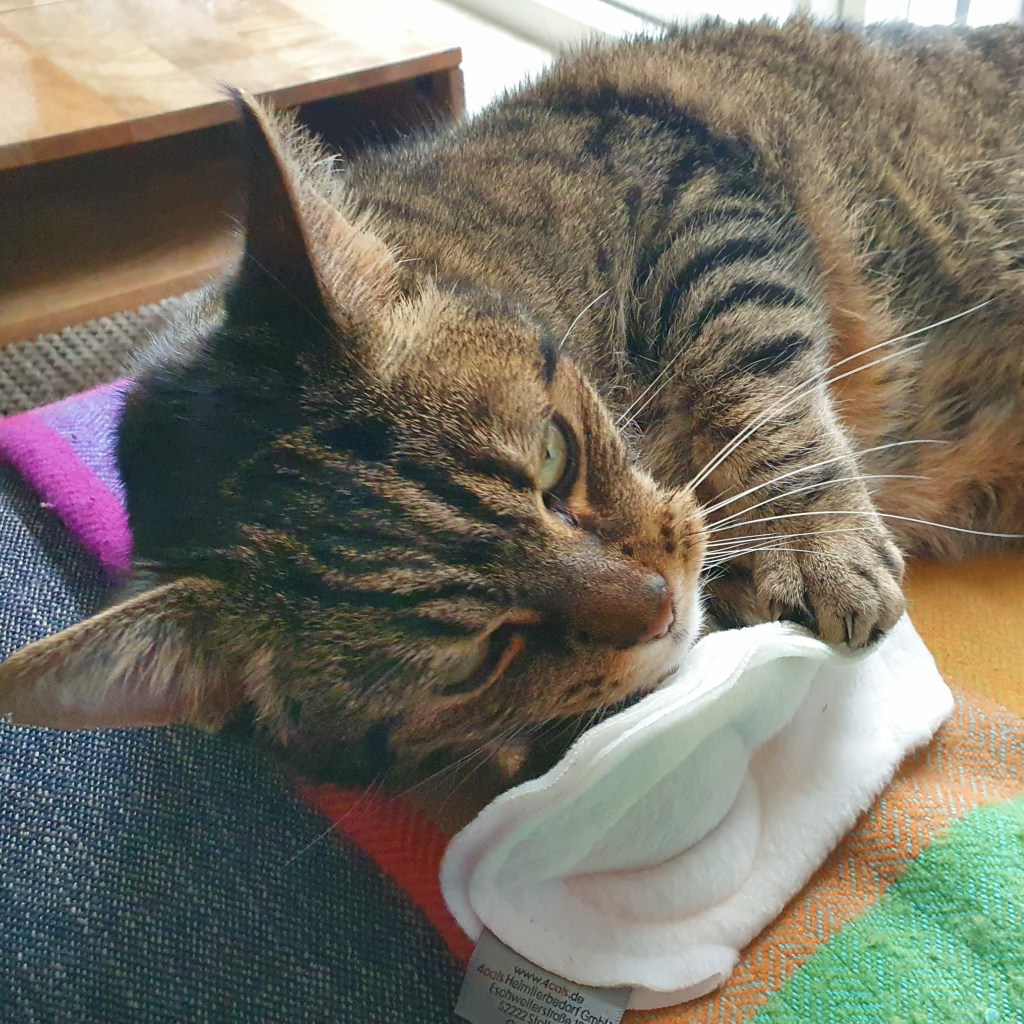
Let’s start with the cat goodies first. Inside this box are two toys, food and extremely delicious treats! My cat Dirk kept giving me paw, without me giving the “give paw” signal, that is how much he loves the treats! A always, the 4Cats toy was a big hit as well and the was an interesting Jolly Moggy Ladybird toy. This one will especially appeal to kittens and younger cats, but even oldie Dirk was excited. This is the first toy he aver reacted to as soon as he heard it chirp. Yes, it chirps when you (or your cat) touch it! These sounds are often a bit fake, but this one was really good. It is a high-pitched chirp, just the sound you can imagine ladybirds making, and piqued his interest straight away.

Now on to the gifts for Cat Mums, although anything that makes our cats happy is already a gift in itself. I love the cute card that comes in the box. You don’t even have to write anything inside it, the recipient will automatically know their cat gave them this lovely present. There is a special blend of earl grey tea that smells and tastes amazing.
And there are two gifts that will put a smile on your face for a long time to come. One is a pink, scented, hanging candle especially designed for Gus&Bella. The scent is gorgeous, it really is. It’s called Rose Velvet & Oud and smells very luxurious, yet subtle.
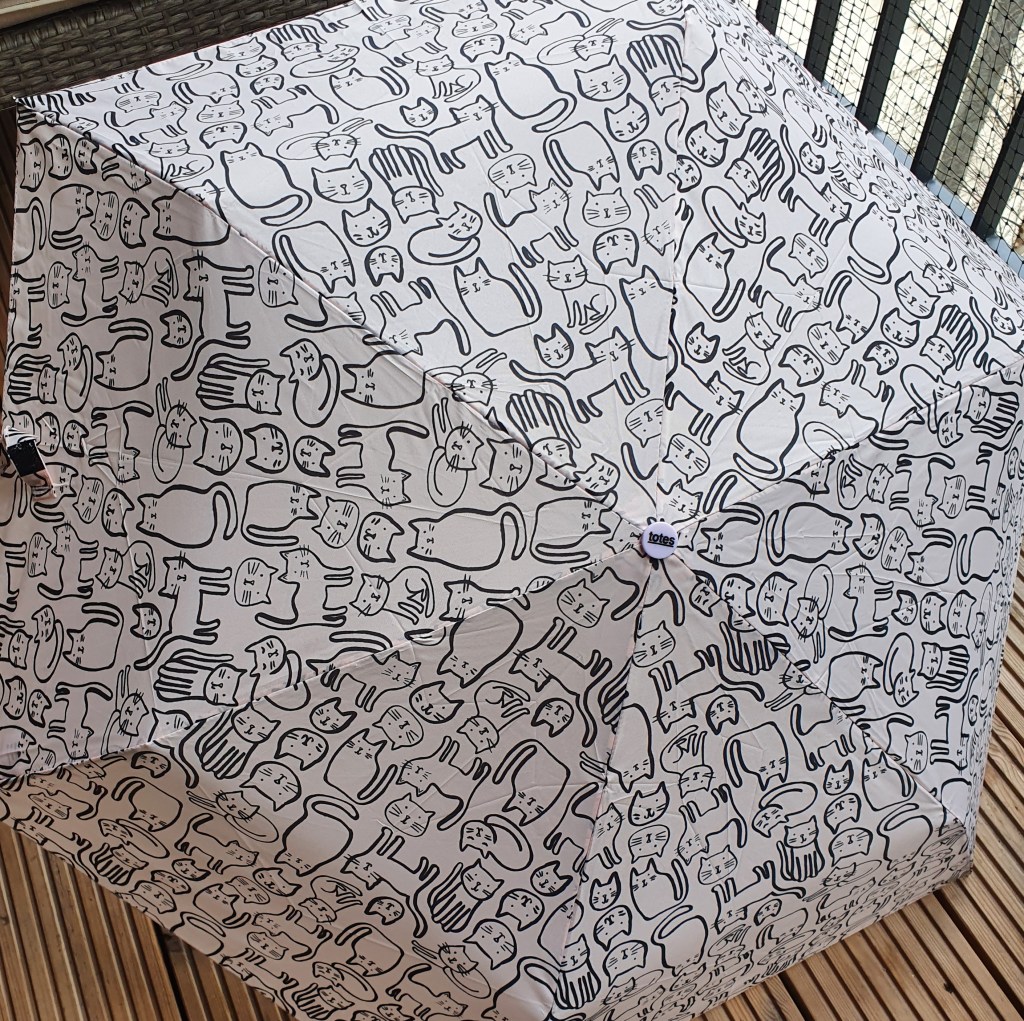
The other is a super cute umbrella. I know spring is coming, we this is the UK after all! You can put this umbrella in your bag, just in case, and take it out as soon as you feel a drop of rain. After all, you’ll want to show it off!  It will make you happy it is raining and is sure to put a smile on other people’s faces too.
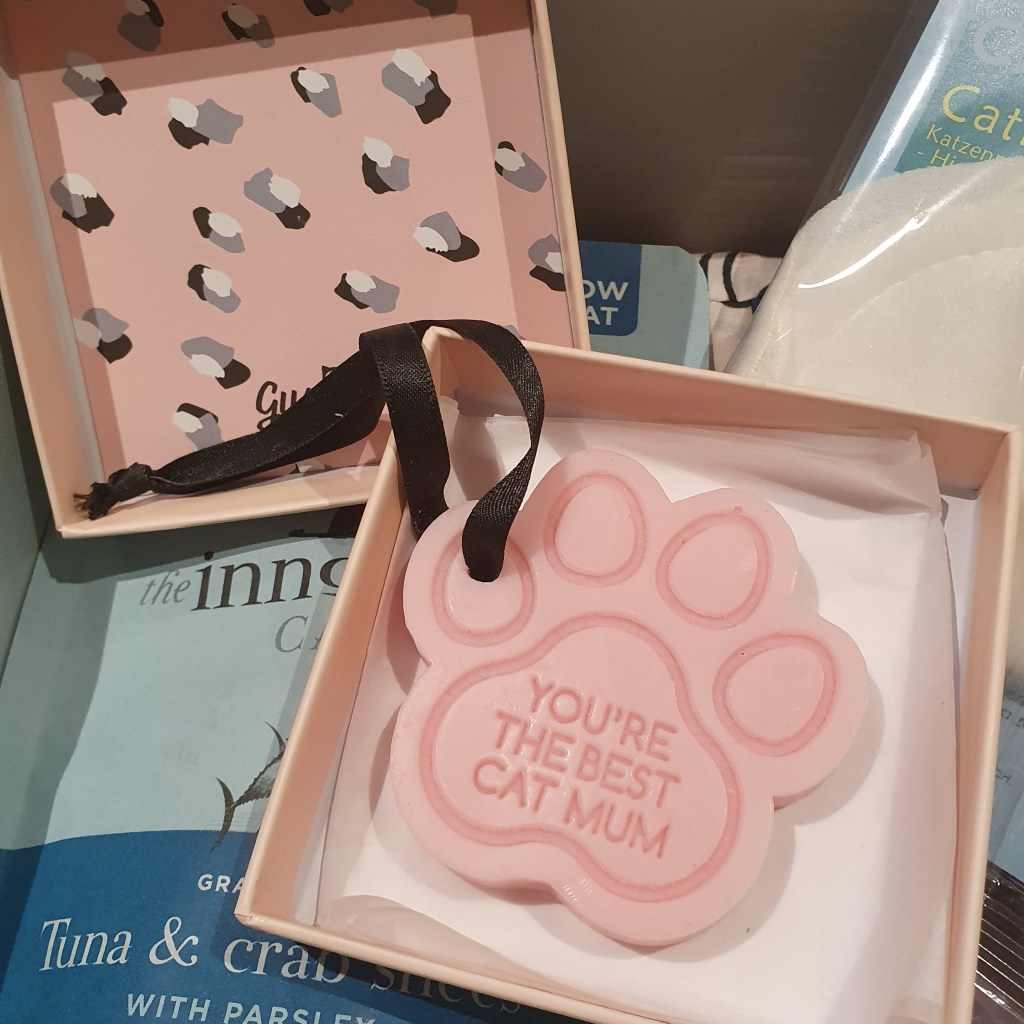
It really is a feel-good, spring is in the air gift box. Perfect for Mother’s Day!

To order yours or order it for a special Cat Mum in your life, click here.

Brushing your cat’s teeth

To mark Pet Dental Awareness Month I am re-posting this blog about brushing your cat’s teeth

Dental hygiene is as important for cats as people.
It helps keep your cat in great condition and prevents diseases (and a bad breath).

Still, you may feel a little unsure about brushing your cat’s teeth. I know I was a little taken aback when my vet first suggested brushing Dirk’s teeth.
He showed me ho
w to do it and – surprisingly – Dirk seemed fine with it.
However, trying it at home was a different story…   

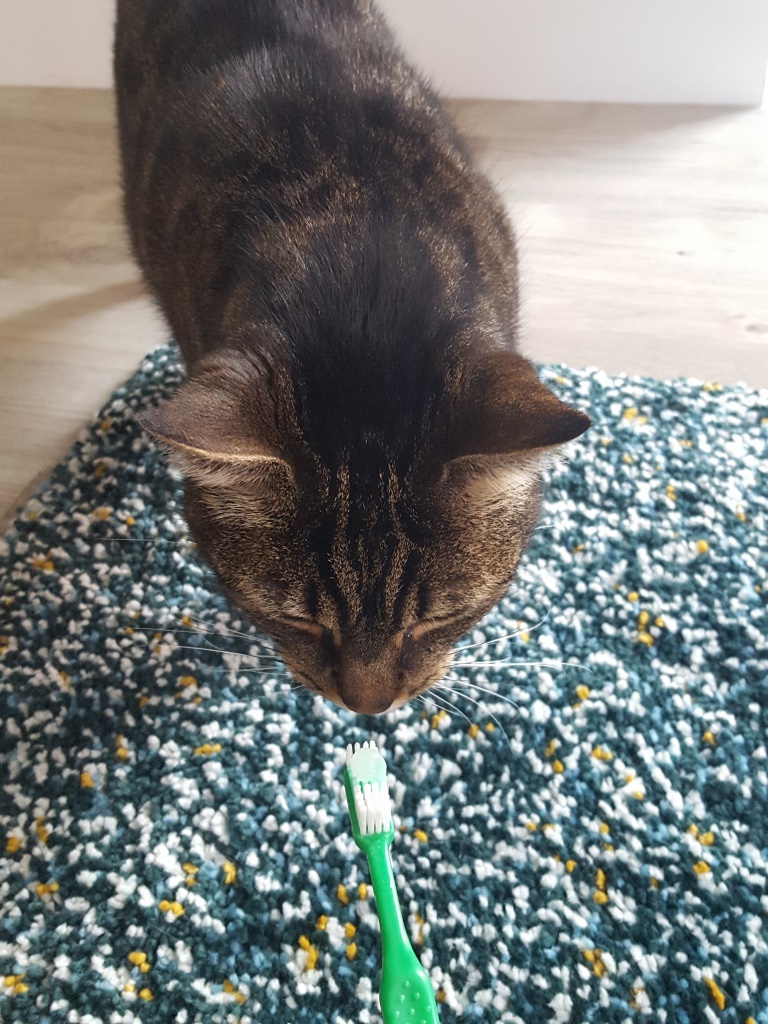
cat brushing teeth
If only it was this easy!


When I first started I was a bit too optimistic. Having seen the vet do it made me think it wouldn’t be so difficult. Dirk was not happy about it though. I tried every other day at first but I have to admit this soon became less frequent. Until Dirk was diagnosed with a dental disease called feline resorptive lesions.

After he had two teeth removed my mind set changed. I went from ‘I’ll try’ to ‘OK, I have to do this’.

Around this time I also started with my advanced feline behaviour course and was learning about learning theory and training cats. This was the perfect opportunity to put what I’d learnt into practice!

I took small steps to get Dirk used to having his teeth brushed. Admittedly, he still doesn’t like it. He tolerates it now although we have to odd day where he doesn’t. Those days are less frequent now, I brush his teeth most days. And afterwards he gets a special reward: his favourite treat which he goes nuts for.

The basics:

20190417_175628

  • First of all, buy toothpaste for cats. Toothpaste for people is toxic for cats, so never use this. Toothpaste for cats comes in tasty flavours such as chicken. Rest assured, even though it is tasty it also contains all the enzymes needed to clean your cat’s teeth.
  • Introduce your cat to the toothpaste. Let your cat lick the toothpaste off your finger (my cat loved it!). This allows the cat to get used to the flavour and texture and they will have a positive association with the toothpaste.
  • Once your cat is used to the toothpaste you can introduce a toothbrush, for example by letting your cat lick the toothpaste off the brush. There are several types of brushes designed for cats. Buy the one you feel most confident using.

Getting the job done:20190417_180510

  • Both you and your cat should be calm and comfortable before you start brushing your cat’s teeth.
  • Either sit behind your cat so they cannot escape or ask someone else to hold and soothe your cat.
  • Start by stroking and reassuring your cat. If you notice your cat becoming stressed, then don’t start brushing. Try again another day. If you turn this into a routine then your cat will become more relaxed over time and will allow you to brush their teeth.
  • Gently pull back your cat’s lips as shown in the picture.

What it looks like at the vet’s…        What it looks like at home
(Dirk prefers to lie down on his side)

  • Brush the teeth in slow circular motions and keep the bristles at a 45-degree angle. Brush the teeth and just beneath the gum margin, don’t brush the gums directly.
  • Brush as many teeth as the cat allows and praise your cat while doing so. Initially you may only be able to brush for about 10-15 seconds, but that’s a good start! When you’re more experienced and the cat has become more tolerant of having their teeth brushed you’ll be able to brush their teeth in about 1-2 minutes.

For more information please ask you vet or veterinary nurse.
For a video instruction, as well as additional information, please consult International Cat Care’s website.

Catnip: its other effect

Research has found that there is more to catnip than just its crazy effect!

We all know our cats can go crazy for catnip: drooling, rubbing, licking, etc. Research by Uenoyama et al (2021) has found that this is not its only effect though. Both catnip and silver vine also function as mosquito repellants. How does that work?

The main component of both catnip and silver vine that elicits rubbing behaviour is called nepolactol. When cats rub against or roll over catnip or silver vine nepetalactol is transferred from the plant to the cat’s face. The researchers found that mosquitoes avoided the faces/heads of those cats that had rubbed their faces against catnip or silver vine. It thus works as a natural mosquito repellant. This research therefore suggests there may be a biological reason for this behaviour and that it is not solely related to feelings of euphoria.

To read the study click here.

Scratch, scratch, scratch

As a cat owner few things are more annoying then your cat not using their scratching post but instead scratching your bed, sofa, carpet, wallpaper or really anything BUT the scratching post! I know all about it, because Dirk and I went through quite a few climbing trees and scratch boards until we finally found some options that we are both happy with. Dirk was fairly persistent in his sofa, chairs, carpet and bed scratching behaviour, but we’ve now mostly tackled the issue (although he does still scratch the bed in the morning as a means to get me to feed him).

The first scratching tree I got Dirk was a fairly small one and not all that sturdy. He is a big cat and needed something bigger. So that’s what he got!

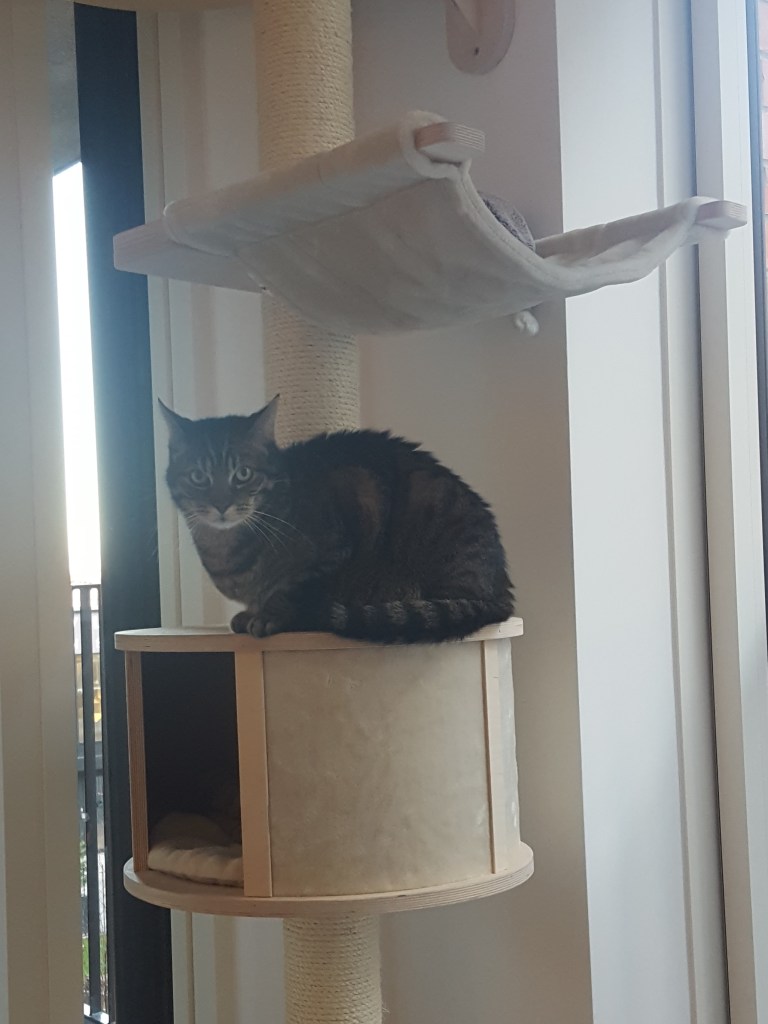
I loved this scratching barrel, it looked very sleek and had levels inside so Dirk could climb inside and hide. Dirk loved sleeping in it, but hardly ever used it as a scratching post. He still used the carpets, sofa and chairs instead…

I figured he might like some horizontal scratching surfaces as well as some thinner scratching posts. In came the scratching pads and sisal poles, but with limited success. Dirk used them, but rather in addition to his other “scratching posts” (by now you know which ones I mean).

I don’t give up that easily though and realised that part of the appeal when scratching carpets and sofa was the fact he was destroying them: pieces of fabric came off. Perhaps he would be happier if I gave him a scratcher that he could shred?

Luckily, he really likes his cardboard scratchers, both to scratch (or shred) and sleep on!

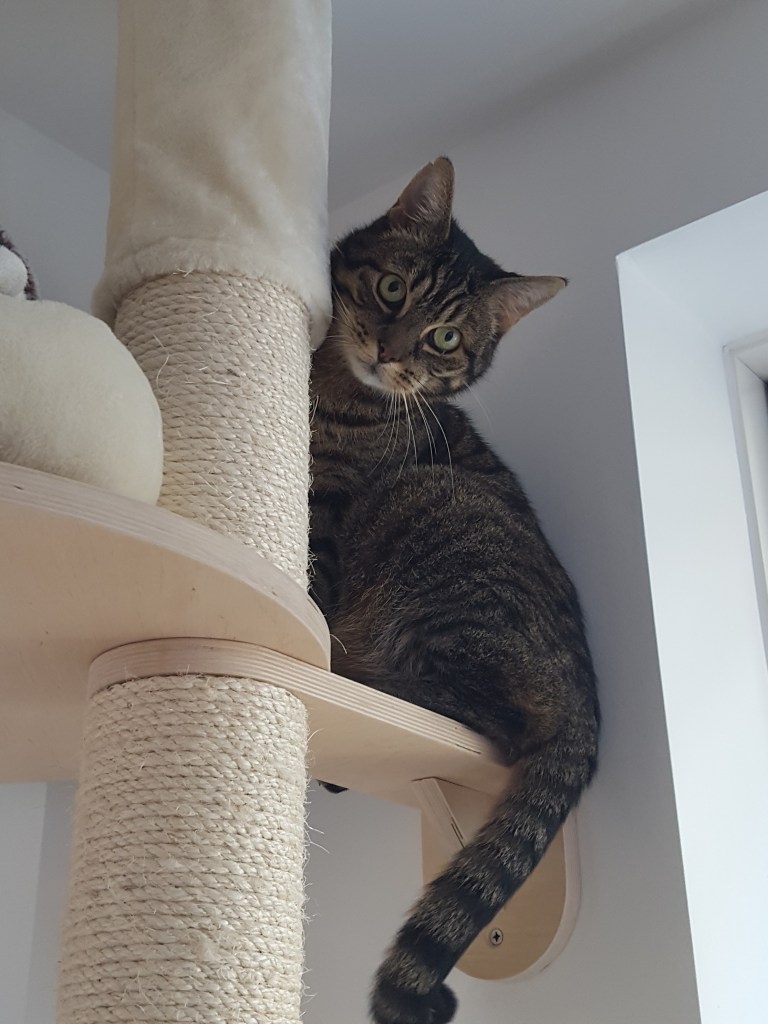
Dirk also loves the most recent addition, which is a floor to ceiling climbing tree. He actually uses it to scratch, climb and sleep and has left the sofa and chairs alone since the tree’s introduction (knock on wood).

If you want advice about which type of scratching post to choose, then check out this brilliant article by International Cat Care.

Flat faces negatively impact cats’ ability to communicate

Most of us know that flat-faced cat and dog breeds have breathing difficulties, but research by Finka et al (2020) found that “exaggerated” features may make it more difficult for pets to communicate with us.

Facial expressions help owners understand whether or not their pet is in pain. However, the researchers found that the “neutral faces of several of the brachycephalic breeds (e.g. Exotic short hairs, Persians and particularly Scottish folds)” showed more pain associated features “compared to the neutral expressions of most other breeds”. In fact,”[i]n the case of Scottish folds, their neutral facial landmarks indicated greater pain-like features even compared to the DSH cats that were actually in pain.”

These findings are potentially relevant when facial expressions are used to identify pain, especially in flat-faced breeds. This research suggests that facial expressions of domestic shorthair cats cannot be confidently applied to flat-faced breeds.

“The ability of companion animals to readily solicit care from humans is obviously advantageous. However, it is possible that permanently vulnerable looking individuals might have a diminished capacity to clearly indicate when care is or is not required, as well as to display other information relevant to their actual state or intentions. Thus, if certain cat breeds are being selected to display “pain-like” features on their faces, these features may serve to solicit unwanted or inadequate attention from their caregivers.”

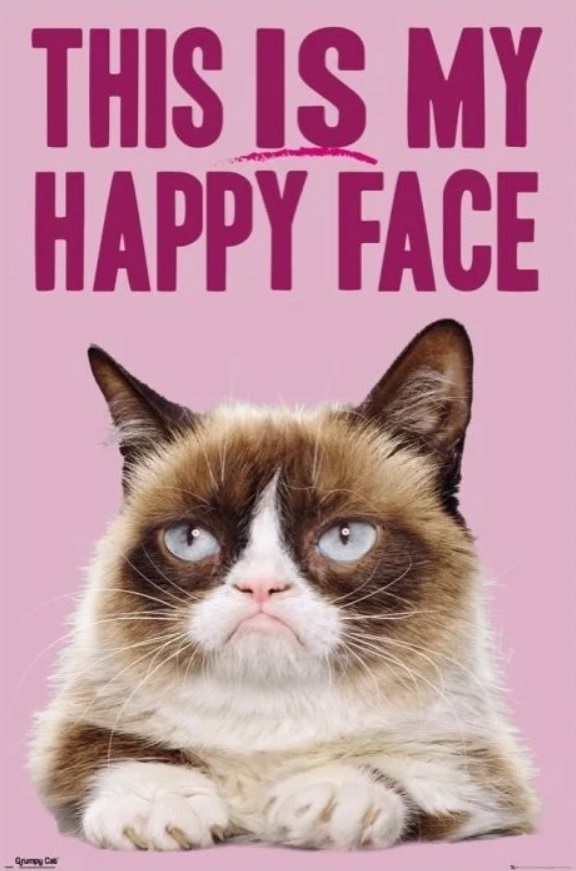
“More generally, such types of anthropocentric selection might lead to increased anthropomorphic tendencies. If, for example, the animal has the appearance of an expression which humans find relatable on some level, even if it is not necessarily reflective of that animals’ affective state, it may be used to attribute emotions or characteristics to them. For example, “grumpy cat” a cat made famous by her coverage on social media achieved her moniker due to her perceived “frowning” facial appearance. However, this was likely a result of a combination of her feline dwarfism and paedomorphic features, rather than an expression of her irritability.”