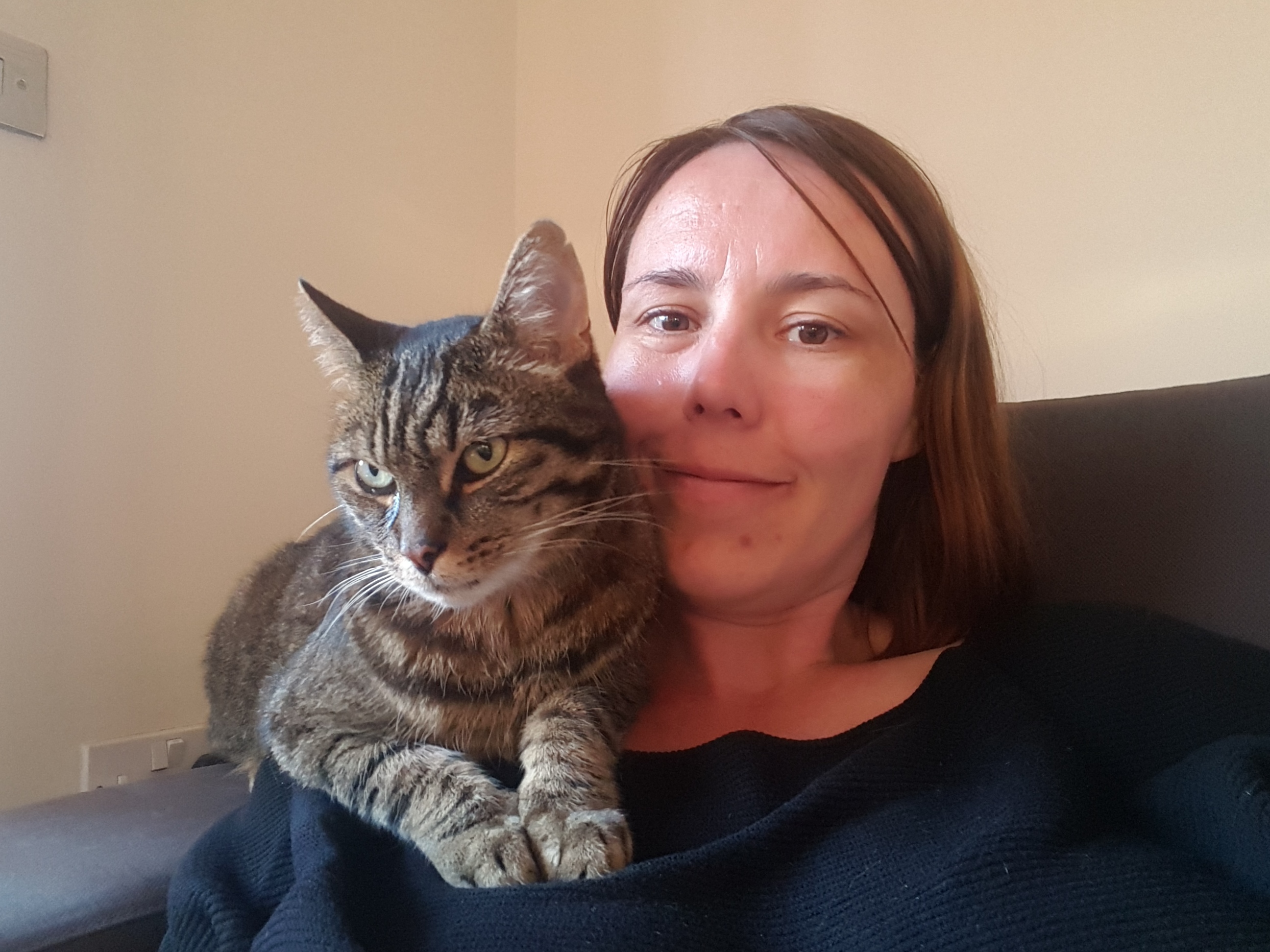
Flat faces negatively impact cats’ ability to communicate

Most of us know that flat-faced cat and dog breeds have breathing difficulties, but research by Finka et al (2020) found that “exaggerated” features may make it more difficult for pets to communicate with us.

Facial expressions help owners understand whether or not their pet is in pain. However, the researchers found that the “neutral faces of several of the brachycephalic breeds (e.g. Exotic short hairs, Persians and particularly Scottish folds)” showed more pain associated features “compared to the neutral expressions of most other breeds”. In fact,”[i]n the case of Scottish folds, their neutral facial landmarks indicated greater pain-like features even compared to the DSH cats that were actually in pain.”

These findings are potentially relevant when facial expressions are used to identify pain, especially in flat-faced breeds. This research suggests that facial expressions of domestic shorthair cats cannot be confidently applied to flat-faced breeds.

“The ability of companion animals to readily solicit care from humans is obviously advantageous. However, it is possible that permanently vulnerable looking individuals might have a diminished capacity to clearly indicate when care is or is not required, as well as to display other information relevant to their actual state or intentions. Thus, if certain cat breeds are being selected to display “pain-like” features on their faces, these features may serve to solicit unwanted or inadequate attention from their caregivers.”

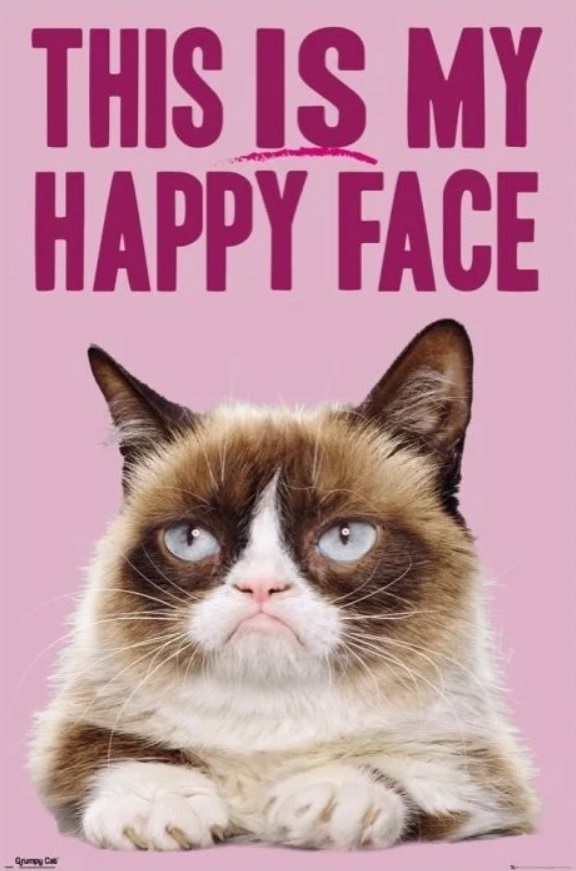
“More generally, such types of anthropocentric selection might lead to increased anthropomorphic tendencies. If, for example, the animal has the appearance of an expression which humans find relatable on some level, even if it is not necessarily reflective of that animals’ affective state, it may be used to attribute emotions or characteristics to them. For example, “grumpy cat” a cat made famous by her coverage on social media achieved her moniker due to her perceived “frowning” facial appearance. However, this was likely a result of a combination of her feline dwarfism and paedomorphic features, rather than an expression of her irritability.”
Prepare Pets for Your Return to the Workplace

* From my partners at katzenworld.co.uk

With many people returning to the workplace after the latest government updates, this means that we will be spending more time away from home – and less time with our furry friends.

According to PDSA Vet Nurse Nina Downing, this can have a huge impact on our pets. “The pandemic has turned our normal routines upside down, and our pets are affected just as much as we are.  According to our PDSA Animal Wellbeing Report 2021, nearly one in five (18%) dogs in the UK acquired since March 2020 have shown signs of distress when left alone. For dogs acquired before March 2020 the figure is 5%. Signs of separation anxiety, or separation-related behavior (SRB) can vary from excessive whining and barking, destroying things, loss of toilet training, trying to escape, depression and inactivity.”

Though we can’t be with our pets 24/7, there are plenty of things we can do to help them get used to being without their owner.  Preparation is key, so that they feel comfortable when left alone, as they could have become used to having constant company.

See below for Nina’s top five tips:

  1. Keep them company

“Many of us have responsibilities away from home that we just can’t avoid. Make sure pets aren’t left alone too long by popping home on your lunchbreak or getting a neighbour to check in once or twice a day.  If that’s not possible, use professional services like pet sitters and doggy day care.

  1. Create a safe space

“Give your pet a space in the home they can call their own, where they know they will be safe while you’re away. Make this area free from noise, comfortable and relaxing with toys and chew items to help to create a safe haven for them. By doing so, we provide a place to escape anything that might be scary.

  1. Ease into new routines

“Just like we’ve had to get back into the swing of normality again, it really helps our pets if we can ease them into new routines. Use the same word as a cue such as “leaving” and something visual like placing a certain object in the same place so your dog understand this is when they will be left alone. When getting your pets used to being left, leave them alone for short periods of time, gradually increasing the length of time every time after that when they are comfortable. This way, they’ll soon become used to you leaving and coming back and won’t be anxious about not knowing when they are going to be left.

  1. Stimulation

“One of the simplest actions we can take to prevent our pets from getting bored is giving them something to do. Feeder toys, stuffed with pet appropriate paste and then frozen, are excellent for keeping their brains active for long periods of time – and may remove the temptation to destroy household items too!

  1. Set a calming atmosphere

“There are a number of ways you can form a tranquil environment for your pet. We recommend using special items like plug-in diffusers and collars that release natural soothing pheromones or herbal remedies, creating a calming atmosphere while you’re away. Think of this as turning your home into a furry friend spa!”

For more information and tips on helping pets as lockdown eases, visit www.pdsa.org.uk/PreventingSeparationAnxiety

Problem-solving ability and laterality in cats

I started teaching Dirk to give paw a few months ago and we have now progressed to one knock = right paw and two knocks = left paw. Of course he makes mistakes occasionally, but overall he is pretty good at giving me the paw I’m asking for.

When I first started training Dirk I noticed he has a slight preference to use his left paw. He would always use that oe first and also uses it most frequently. He also uses his left paw most when playing with his puzzle feeders (though he does switch to right paw as well).

Intrigued by his paw preference I started looking into research about domestic cats and left- or right-pawedness and found a very interesting research paper on this topic. Obviously, food was involved in testing the cats as participation needs to be rewarding for them too 😉 However, even that could not convince all cats to participate as 3 out of 41 cats tested did not move a paw at all. Of the other 38 cats, 10 were right-pawed, 12 left-pawed and 16 were ambilateral: they showed no preference for either left or right paw.

The study showed that cats with a clear paw preference, either left or right, were better at solving the food puzzles than those cats that did not have a paw preference. The cats with a paw preference found their way to the food a lot quicker with fewer paw movements.

The researchers discovered that domecats actually preferred opening the food puzzles with their head rather than paw. Those that had a head preference opened fewer sections of the puzzle feeder than those with a paw preference. This means that cats that perfer to use their paws possibly have better motor skills and problem-solving skills than those that prefer using their heads. One possible explanation that some cats have a head preference may be related to domestication: we tend to feed our cats from bowls which does not require any motor skills from the cat.

Does it matter whether a cat is left-pawed or right-pawed, ambilateral or prefers to use their head? In a domestic cat probably not, but perhaps this research gets us one step closer to proving just how intelligent cats are 😉

Left-pawed or right-pawed, just stretch them all

Why do cats chatter their teeth when they spot prey?

Many owners will have heard and seen their cat chattering when they spot prey. Indoor cats do it too even if they have never hunted.
So why do they do this? Is it because they can’t get to the prey?

In fact, this is normal hunting behaviour. Your cat’s instincts are kicking in – even if they have never hunted they still have those instincts. Experts used to believe cats were excited or frustrated when they chatter or that they were mimicking their prey’s sounds. Cats hunt for a large variety of prey, though, and most of them sound nothing like a cat’s chattering.
Most experts now think that the chattering jaw movements are similar to the killing bite. Your cat is eagerly anticipating having a good bite.

Perhaps we can satisfy indoor cats by giving them a toy to chase & catch after the prey has left and give the cat a treat 😉

I think the noise is very funny. I laugh whenever I hear Dirk do it and it’s usually when he sees birds nearby (pigeons seem to love teasing him by sitting on the balcony railing).

20210318_095227

Cats’ personalities: do they become like their owners?

I think most of you are familiar with pictures joking about the physical similarities between owners and their pets. Do pets start to look like their owners or did the owner choose a pet that looks like them?
The more interesting question is whether owners’ and pets’ characters are similar. Research suggests cats and owners strongly influence each other’s behaviour, especially if the cat lives indoor only and if the owner is a woman!

The study also showed that cats remember when they are treated kindly and this directly affects how they react to their owners’ wishes. Cats were more likely to respond to their owner’s request for affection when that person had taken care of their needs in the past.

“A relationship between a cat and a human can involve mutual attraction, personality compatibility, ease of interaction, play, affection and social support,” said co-author Dorothy Gracey of the University of Vienna. “A human and a cat mutually develop complex ritualized interactions that show substantial mutual understanding of each other’s inclinations and preferences.”

While cats have plenty of male admirers, and vice versa, this study and others reveal that women tend to interact with their cats… more than men do.

“In response, the cats approach female owners more frequently, and initiate contact more frequently (such as jumping on laps) than they do with male owners,” co-author Manuela Wedl of the University of Vienna told Discovery News, adding that “female owners have more intense relationships with their cats than do male owners.”

dirk20180711_201804