Say my name, say my name: do cats recognise their names?

Cat owners or lovers would probably say that of course cats recognise their names. More sceptical people might wonder whether they really recognise their name or just respond to their owner’s voice.

Research by Atsuko Saito, Kazutaka Shinozuka, Yuki Ito and Toshikazu Hasegawa shows that cats do indeed recognise and respond to their names! Their study showed that cats respond to their name when said by their owner and also when said by a test person. Cats also distinguish between their name and other words, both by owners and test persons.

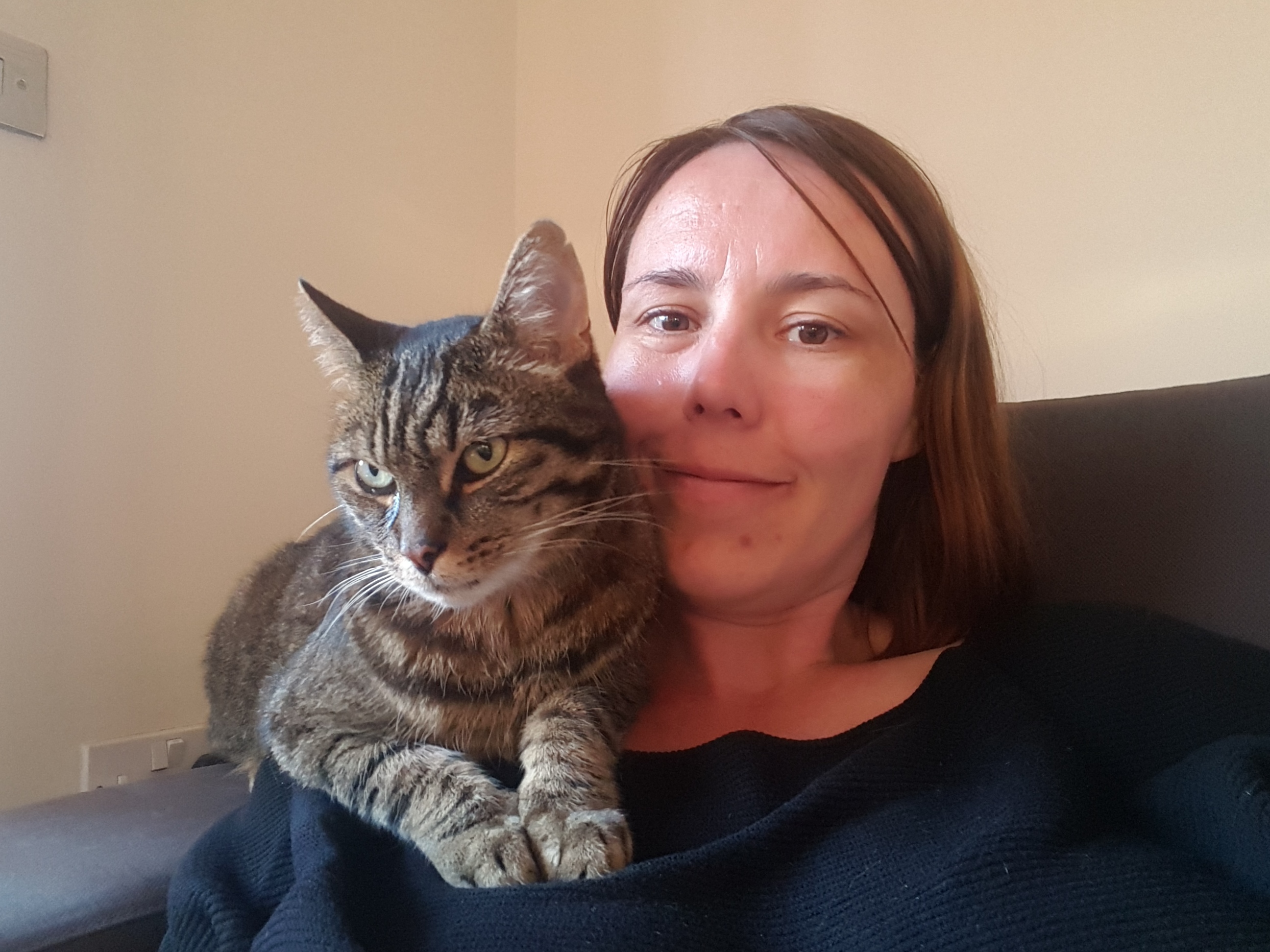
Cats can learn a variety of words: they form associative meaning between words and things. As owners, we often say “treat” and find the cat comes running: they have learned that this word means they’ll get some tasty food. They can learn other words too: I often ask Dirk if he wants to cuddle. He has learned that when I say cuddle he will get a lot of strokes and fuss so depending on his mood he’ll come over. Another word he knows is “coffee”, although his association of the word is not with the drink, but with time to sit in my lap 😉

Did you just say coffee?

Why do cats chatter their teeth when they spot prey?

Many owners will have heard and seen their cat chattering when they spot prey. Indoor cats do it too even if they have never hunted.
So why do they do this? Is it because they can’t get to the prey?

In fact, this is normal hunting behaviour. Your cat’s instincts are kicking in – even if they have never hunted they still have those instincts. Experts used to believe cats were excited or frustrated when they chatter or that they were mimicking their prey’s sounds. Cats hunt for a large variety of prey, though, and most of them sound nothing like a cat’s chattering.
Most experts now think that the chattering jaw movements are similar to the killing bite. Your cat is eagerly anticipating having a good bite.

Perhaps we can satisfy indoor cats by giving them a toy to chase & catch after the prey has left and give the cat a treat 😉

I think the noise is very funny. I laugh whenever I hear Dirk do it and it’s usually when he sees birds nearby (pigeons seem to love teasing him by sitting on the balcony railing).

20210318_095227

Cats’ personalities: do they become like their owners?

I think most of you are familiar with pictures joking about the physical similarities between owners and their pets. Do pets start to look like their owners or did the owner choose a pet that looks like them?
The more interesting question is whether owners’ and pets’ characters are similar. Research suggests cats and owners strongly influence each other’s behaviour, especially if the cat lives indoor only and if the owner is a woman!

The study also showed that cats remember when they are treated kindly and this directly affects how they react to their owners’ wishes. Cats were more likely to respond to their owner’s request for affection when that person had taken care of their needs in the past.

“A relationship between a cat and a human can involve mutual attraction, personality compatibility, ease of interaction, play, affection and social support,” said co-author Dorothy Gracey of the University of Vienna. “A human and a cat mutually develop complex ritualized interactions that show substantial mutual understanding of each other’s inclinations and preferences.”

While cats have plenty of male admirers, and vice versa, this study and others reveal that women tend to interact with their cats… more than men do.

“In response, the cats approach female owners more frequently, and initiate contact more frequently (such as jumping on laps) than they do with male owners,” co-author Manuela Wedl of the University of Vienna told Discovery News, adding that “female owners have more intense relationships with their cats than do male owners.”

dirk20180711_201804

Do Cat Fences Really Work?

* Originally written by Rebecca Owens for ProtectaPet

This is a question we get from cat owners all the time. When you first see an outdoor fence system designed to contain pets without a roof barrier, people are left scratching their heads as to why their cat can’t climb over. Let us tell you how it works!

The science

The movement required to climb over our cleverly designed overhang fencing doesn’t come naturally to a cat. In order to do so, a cat would need to climb and then flip over the lip of the fence.

Although cat’s are arboreal creatures and it’s in their nature to climb trees, we still hear of countless tales of cats becoming stuck and unable to get back down again. This is a similar problem for cats when it comes to cat fencing.

PetMD.com says; “It’s really easy for cats to climb trees—cat claws are the ideal tools for propelling them upwards… “A cat in a tree may have trouble coordinating their hind and front feet when they try to back down. It’s just not a movement cats normally do,” says Susan Bulanda, a canine and feline ethologist, author, and search and rescue trainer who lives in Maryland.”  

This doesn’t mean they won’t try! Your determined feline friend may try to get over the fence, but after a couple of failed attempts and a damaged ego, normally cats quickly become comfortable within their safe territory. 

Patented technology

We created our intuitive design to save pets out of love for our own. You can read more about out story here. Our products are patented and designed by international-leaders in cat proofing. We have been constantly improving our design of cat fence barriers and other containment systems since 2009.

The ProtectaPet® logo on your fencing brackets acts as an assurance of quality that you are receiving the very best in cat fencing solutions. 

Agile and strong breeds

We have developed the ‘Bengal Bend’ on our 70cm overhang. The double bend in the bracket gives enhanced protection for the strongest and most agile breeds.

If you’re concerned about your cat being able to break through the mesh or brackets due to strength, you can be assured in knowing that we use powder-coated steel for strength, sleek aesthetics and durability. The fencing is low maintenance and long life in use. The mesh is exclusively manufactured for ProtectaPet, so you won’t find it anywhere else!

ProtectaPet Disclaimer

We have kept over 17,000 cats safe within their garden, if you read our reviews you will be hard pushed to find an example of a cat escaping over the cat fence barrier. Escapes can happen if the barrier is not fitted according to the manual: there must be at least 6ft between the ground and the barrier and no plant pots or wheelie bins that could provide leap points. There are a few rare examples of particularly agile cats that have managed to get over the barrier. If you’re concerned that your cat would be able to get over the barrier after reading this post, then please get in touch for a bespoke quote for a catio or other mesh roofed solution.

How to help our arthritic cats

I’ve published this before but want to share it with you again to mark World Arthritis Day.

arthritis day 12 October

* Originally written by me for citikiti.co.uk

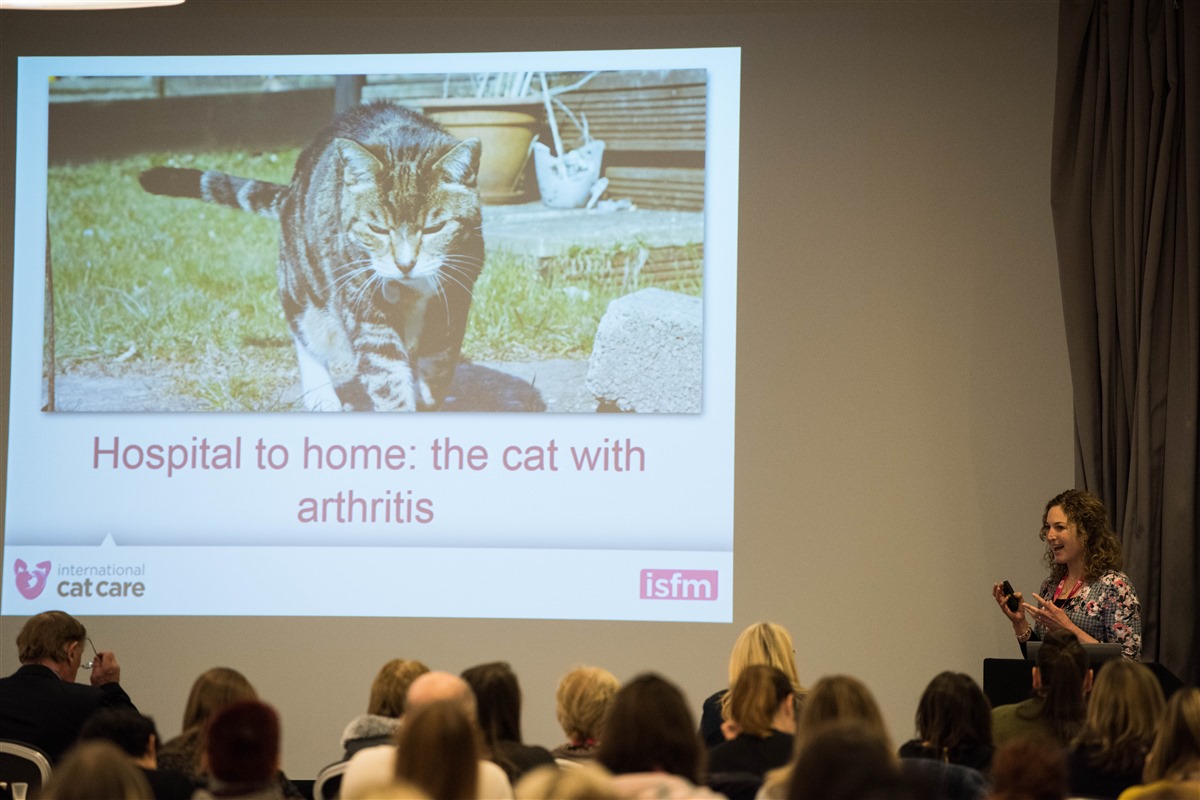
From the ICatCare Conference

Like people and dogs, aging cats can suffer from arthritis. In itself this doesn’t sound too surprising, but this disease has been under-diagnosed. In part, this is because cats rarely show signs of illness unless and until they are seriously ill; in part this is because symptoms of arthritis can easily be dismissed as signs of ‘old age’. Astonishingly, research has shown that around 90% of cats older than 12 years suffer from joint disease.

Arthritis is very painful, but many cats will try to hide the fact they are suffering. However, there are signs your cat may be suffering from arthritis. One of the things you may notice is that your cat no longer jumps up or down or is quite hesitant to do so. You may notice their legs are stiff, especially after the cat has been resting for a while.

They may sleep more and play less. Your cat may be a bit grumpy when you pick him up or stroke him. And because their joints are painful it may be difficult for them to use the litter tray: you may notice ‘bum sticking out’ types of litter tray accidents or an accident near the tray because the cat couldn’t manage to posture correctly inside the tray.

International Cat Care has created a checklist that you can use if you suspect your cat may be suffering from joint disease: https://icatcare.org/…/kcfin…/images/mobility_check-list.pdf

Obviously, a vet needs to make the diagnosis and will discuss treatment with you.

Besides medical treatment there are many things we can do at home to make our aging cats’ lives a bit easier.
• Make sure the cat’s sleeping & hiding places are easily accessible: either build steps or a ramp so your cat doesn’t have to jump to get to his favourite resting places. And give your cat soft and warm beds.
• Provide a large litter tray that is easy to step in to and out of: either make sure the litter tray has a lowered side so your cat doesn’t have to lift its legs too much or build a ramp for easy access. Use sandy litter, that is nice and soft underneath their feet.
• Food and water should be within easy reach: provide raised bowls so they don’t have to stretch their neck too much to reach it.
• Food, water and litter trays should preferably be available on every level of the house so your cat doesn’t have to go up- or downstairs to use these essential resources. Walking up and down the stairs can be quite painful for the arthritic cat.
• If your cat uses a cat flap: provide steps or a ramp on either side of the cat flap for easy access.
• Maintain a healthy weight: extra weight just put more pressure on those painful joints.

And let’s not forget some TLC: groom and play with your cat. Your cat will have more difficulty grooming himself, but most cats enjoy feeling prim and proper. They will be quite grateful to receive some gentile grooming with a soft brush.

Play with your cats too. Cats are naturally playful and frequent short play sessions will help ease the pain in their joints. Hunting style games are interactive and mimic the cat’s natural behaviour, so he will surely appreciate this. And of course it’s fun for you too

For more information about arthritis in cats see International Cat Care’s website.

ICC-2404