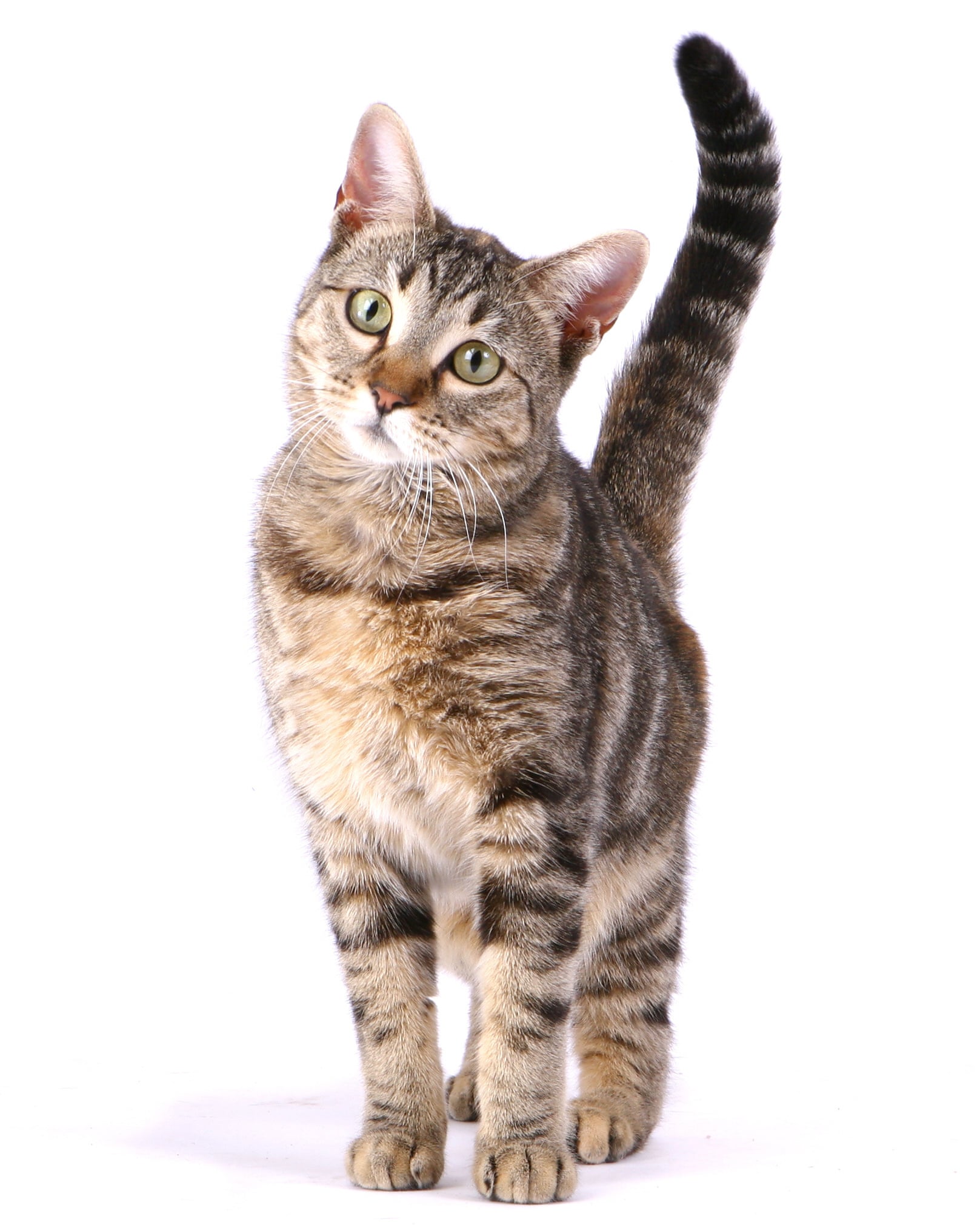
Say my name, say my name: do cats recognise their names?

Cat owners or lovers would probably say that of course cats recognise their names. More sceptical people might wonder whether they really recognise their name or just respond to their owner’s voice.

Research by Atsuko Saito, Kazutaka Shinozuka, Yuki Ito and Toshikazu Hasegawa shows that cats do indeed recognise and respond to their names! Their study showed that cats respond to their name when said by their owner and also when said by a test person. Cats also distinguish between their name and other words, both by owners and test persons.

Cats can learn a variety of words: they form associative meaning between words and things. As owners, we often say “treat” and find the cat comes running: they have learned that this word means they’ll get some tasty food. They can learn other words too: I often ask Dirk if he wants to cuddle. He has learned that when I say cuddle he will get a lot of strokes and fuss so depending on his mood he’ll come over. Another word he knows is “coffee”, although his association of the word is not with the drink, but with time to sit in my lap 😉

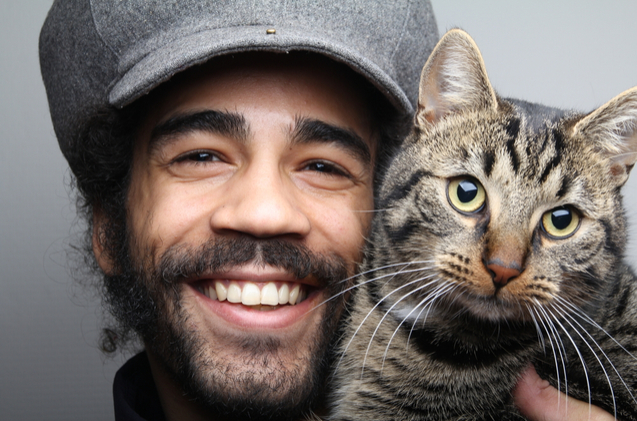
Did you just say coffee?

Cats’ personalities: do they become like their owners?

I think most of you are familiar with pictures joking about the physical similarities between owners and their pets. Do pets start to look like their owners or did the owner choose a pet that looks like them?
The more interesting question is whether owners’ and pets’ characters are similar. Research suggests cats and owners strongly influence each other’s behaviour, especially if the cat lives indoor only and if the owner is a woman!

The study also showed that cats remember when they are treated kindly and this directly affects how they react to their owners’ wishes. Cats were more likely to respond to their owner’s request for affection when that person had taken care of their needs in the past.

“A relationship between a cat and a human can involve mutual attraction, personality compatibility, ease of interaction, play, affection and social support,” said co-author Dorothy Gracey of the University of Vienna. “A human and a cat mutually develop complex ritualized interactions that show substantial mutual understanding of each other’s inclinations and preferences.”

While cats have plenty of male admirers, and vice versa, this study and others reveal that women tend to interact with their cats… more than men do.

“In response, the cats approach female owners more frequently, and initiate contact more frequently (such as jumping on laps) than they do with male owners,” co-author Manuela Wedl of the University of Vienna told Discovery News, adding that “female owners have more intense relationships with their cats than do male owners.”

cat-owner-similarity

Are you a cat whisperer?

Cats have a reputation for being hard to read, but new research from the University of Guelph has found that some people are “cat whisperers” who excel at deciphering subtle differences in cats’ faces that reveal mood.

Women and those with veterinary experience were particularly good at recognizing cats’ expressions — even those who reported they didn’t feel a strong attachment to cats.

“The ability to read animals’ facial expressions is critical to welfare assessment. Our finding that some people are outstanding at reading these subtle clues suggests it’s a skill more people can be trained to do,” said Prof. Lee Niel, who led the study with Prof. Georgia Mason, both from the University of Guelph’s Campbell Centre for the Study of Animal Welfare.

The only research so far on readings cats’ faces has focused on expressions of pain. “This study is the first to look at the assessment of a wider range of negative emotional states in animals, including fear and frustration, as well as positive emotional states,” said Mason.

The videos showed cats experiencing either positive emotional states (situations the cats had sought out, such as being petted or given treats), or in negative states (such as experiencing health problems or being in situations that made them retreat or flee). Each video was focused on the cat’s face –its eyes, muzzle and mouth. None of the cats showed expressions of fear, such as bared fangs or flattened ears, since these facial expressions are already widely understood.

To test your own cat-reading abilities, the research team has created a website with details.

whisperer