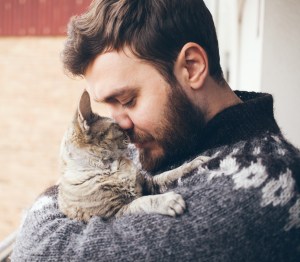
Cats wash or lick other members of their social group, the cats they are close to. This behaviour reinforces the bond and creates a “familiar group scent”.
When cats live with people these people become their social group. If your cat licks you it means they are showing you affection and this behaviour strengthens the bond between you from the cat’s perspective. Enjoy the cat love!
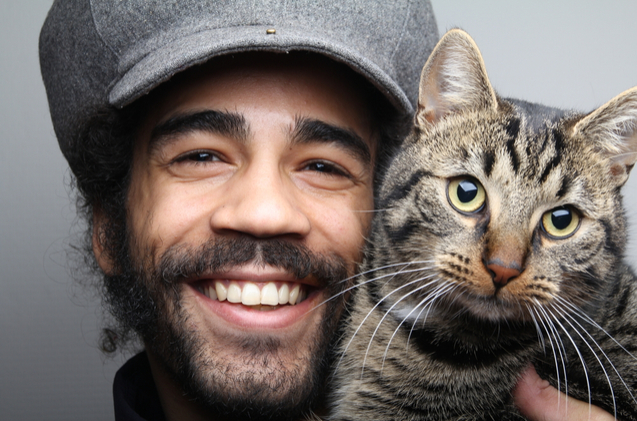
I think most of you are familiar with pictures joking about the physical similarities between owners and their pets. Do pets start to look like their owners or did the owner choose a pet that looks like them?
The more interesting question is whether owners’ and pets’ characters are similar. Research suggests cats and owners strongly influence each other’s behaviour, especially if the cat lives indoor only and if the owner is a woman!
The study also showed that cats remember when they are treated kindly and this directly affects how they react to their owners’ wishes. Cats were more likely to respond to their owner’s request for affection when that person had taken care of their needs in the past.
“A relationship between a cat and a human can involve mutual attraction, personality compatibility, ease of interaction, play, affection and social support,” said co-author Dorothy Gracey of the University of Vienna. “A human and a cat mutually develop complex ritualized interactions that show substantial mutual understanding of each other’s inclinations and preferences.”
While cats have plenty of male admirers, and vice versa, this study and others reveal that women tend to interact with their cats… more than men do.
“In response, the cats approach female owners more frequently, and initiate contact more frequently (such as jumping on laps) than they do with male owners,” co-author Manuela Wedl of the University of Vienna told Discovery News, adding that “female owners have more intense relationships with their cats than do male owners.”
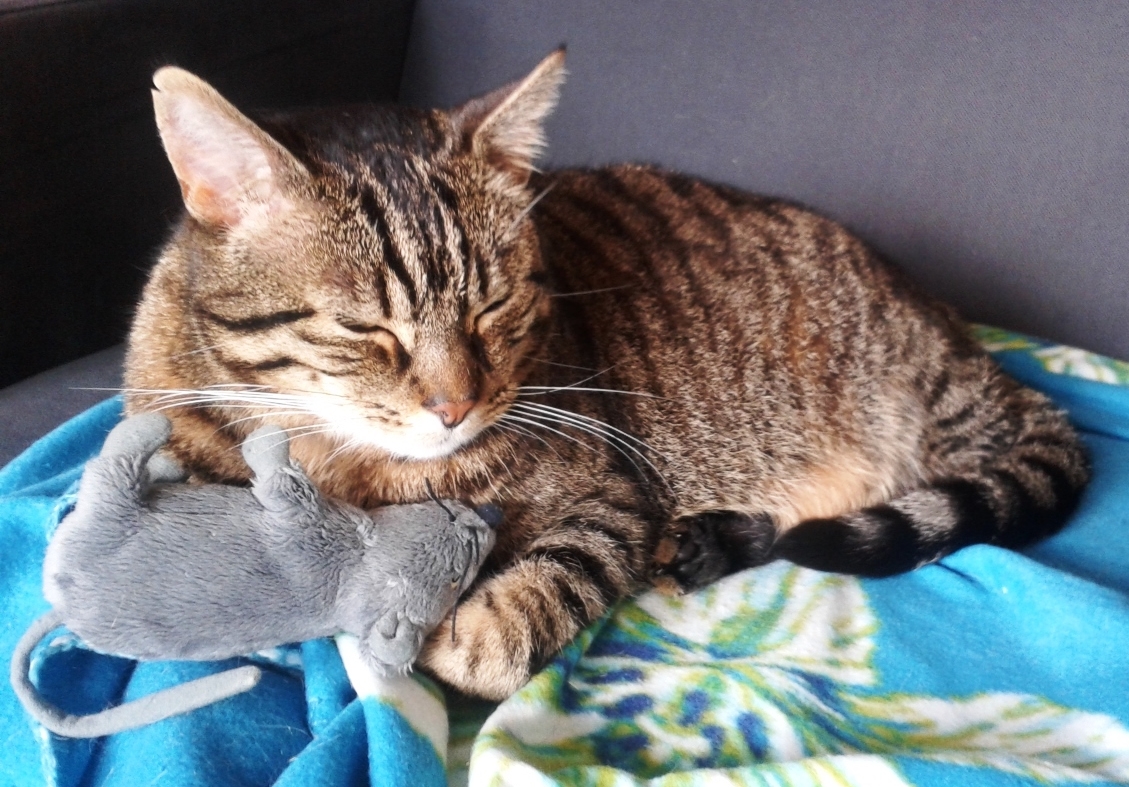
If your cat goes outside then you’ve probably seen them bring home a dead mouse or two… I know it is perfectly normal cat behaviour but I really don’t like dead mice or birds.
It is often said that this is a gift because your cat loves you; however, giving gifts to show love is a human thing to do. Cats do not give other cats gifts.
Mother cats do teach kittens how to hunt and therefore may bring them a dead mouse, or one they haven’t killed yet, to teach them. I don’t think the cat is trying to teach you to catch mice; cats do not see the humans they live with as ‘sort of cats’. Plus, bringing home dead mice is behaviour displayed by male cats as well and also by females that have never had kittens.
Then why do they do it?
A cat’s instinct to hunt is very strong: they hunt even when they are not hungry or do not depend on eating prey to survive. If the cat is not actually hungry they may take the prey home to eat it later. Their instinct is to return to a safe place within their territory to eat.
So it’s not really a gift, but then it sort of is. Your cat is telling you that your home is a safe place for them 🙂
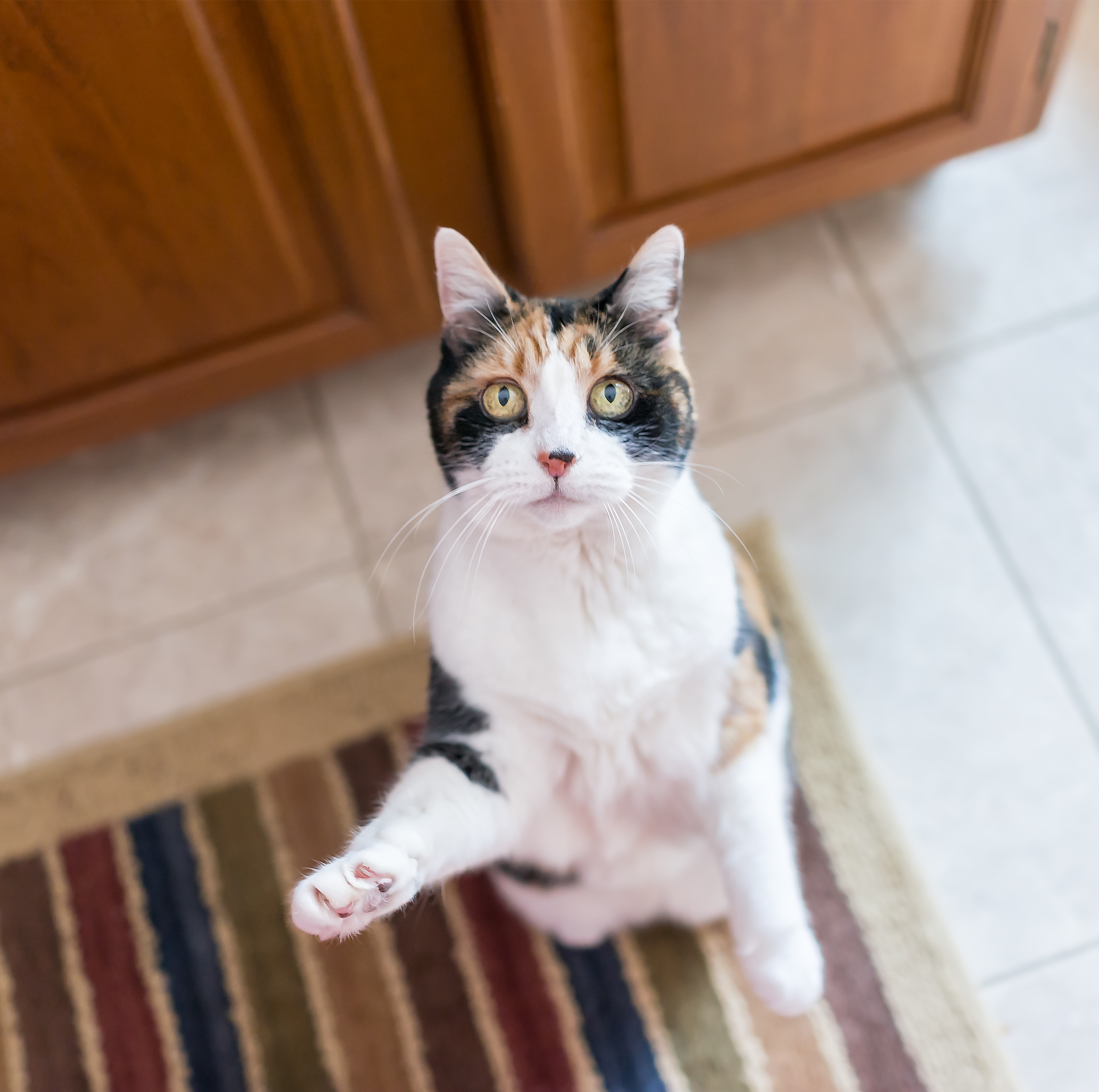
Many of us are familiar with this scene: you are in the kitchen preparing your own food or even doing the dishes and your cat keeps begging for food. They keep meowing, they stand up against your legs or cupboards, they jump on the worktop, they drive you insane until…. you give in and give them some food….
I guess this already answers the question 😉
Your cat will keep doing it because they know you’ll give in and end up giving them some food. The solution is simple enough: stop feeding them when they are begging for food. However, I know it’s not so simple to enforce. It takes will power and the ability to resist those plaintive meows. You may need to walk around wearing ear plugs for a few days. Whatever you do, don’t give in! The cat has learned that begging leads to food so now they have to learn that is no longer leads to food.
It is important not to let your cat jump on the worktop. If they do so simply put them on the floor, don’t punish them or yell at them, just keep putting them on the floor. If your cat is very persistent put them in a different room for a while
Things that can help you:
feed your cat at specific times and only at those times
use automatic feeders so your cat no longer associates you with feeding them
use puzzle feeders (put food in there once or twice a day) so your cat always has access to food but they do have to work for it
don’t feed them any table scraps or while you are cooking
It is always good to discuss this with the vet when you visit them for your cat’s annual health check. They can advise you how much you should be feeding your cat. If your cat is a healthy weight and you feed them accordingly, being hungry all the time could be a sign of illness, so do discuss it with your vet if you’re worried
Well, in all likelihood because you are now working from home and your cat wants your attention!
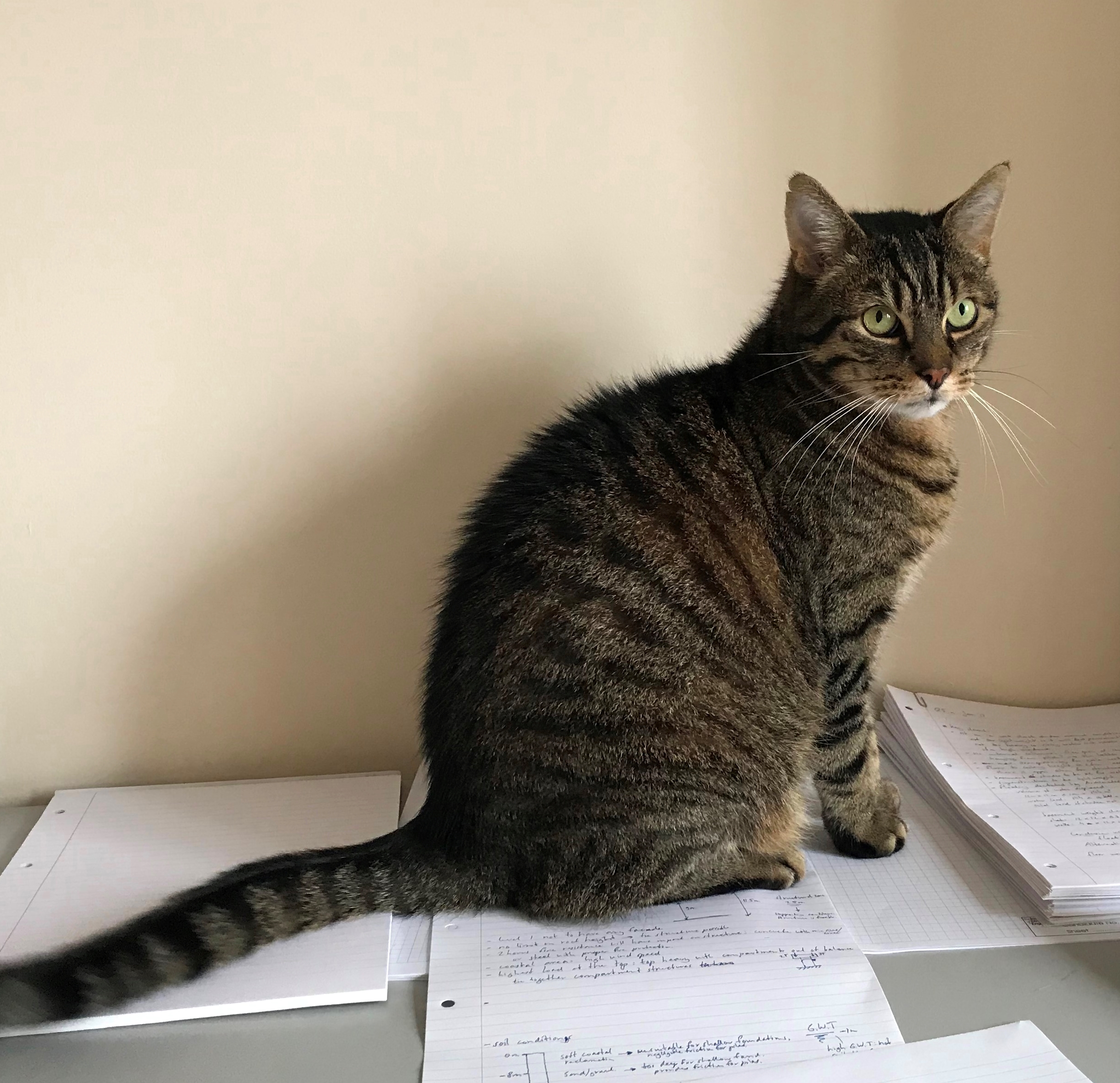
Many of us are now working from home and this can be challenging for both ourselves and our cats. Dirk mostly sticks to his usual routine and seems perplexed to find both me and my husband working from home when he walks into the room. He will demand attention at some point though, usually around 4.30 pm 🙂
However, at times he also looks a little annoyed, as if he’s not getting enough ‘me time’…
How your cat responds to you being at home depends on their personality and their relationship with you – some will look slightly perplexed, if anything at all, and get on with exactly what they do when you’re not there. In which case, you can breathe a sigh of relief and know this information is not for you. Others however, particularly those that are really affectionate and demanding when you are normally at home, will see this as a great opportunity to use you in all kinds of entertaining ways. If this describes your cat… then click here to continue reading Vicky’s advice.
The most important thing is to try to maintain as many routines as possible: feeding time, playtime and normal mornings and evenings. It’s therefore only the bit in the middle, when you don’t leave the house at the usual time, that will feel different. Make sure you find a place to work where your cat doesn’t spend too much time. If you are very lucky and have been suitably quiet, your cat will not have noticed that you are still at home and leave you in peace. This may only be successful until you are desperate for a cup of tea or have to take part in a conference call, at which point your cover is blown. Once your cat establishes where you are, the games begin so read this sequence of events with care, it may happen to you.
1. The obvious first strategy will be for your cat to jump onto your lap, look lovingly at you and miaow faintly to demonstrate his level of hunger and desire for food. Be strong, remember that cats are described as ‘opportunistic feeders’ and this is an ideal time to be ‘opportunistic’ and get something tasty. Your cat is actually not starving and resisting at this stage is not an act of rejection, neither will it look like you don’t love him so just ignore this as best you can. Well done, you have passed the first hurdle and your cat will now be leaving the room with an audible ‘huff’.
2. Sadly, this peace won’t last for long, after having left the room for about 30 seconds, your cat is back and has jumped on whatever surface you are using as a desk. There is a lot of frenzied purring interspersed with more miaowing, noticeably louder than the previous ones when your cat was apparently too weak from hunger to ‘talk’ properly. Your cat now starts rubbing his face backwards and forwards on your hands as you try desperately to type on your keyboard. Every part of you wants to stop typing and give your cat some loving. THIS WOULD BE A MISTAKE! Instead, if you want to get any work done at all while you are home, you need to show your cat that this is not the time or the place. You are now typing nonsense but keep going as you can always delete it all when your cat eventually gives up.
3. Your cat regroups briefly but the third attempt to get your attention has to have impact so he will be trying harder. You may at this stage get a full body flop onto your keyboard (your hands may still be on the keys at this point and therefore temporarily trapped), a flicking tail and a bottom backing menacingly towards your nose or a set of claws dragged slowly and ever so slightly uncomfortably down the side of your face. Stand firm! Focus on the screen, say nothing, pretend you are in the office and your cat is sleeping soundly at home. This is just a dream.
4. If you are very lucky (and truly want this to work) your cat will sit down beside you and start to stare really hard in your direction. You are nearly there, you can do this. Do not under any circumstances look at your cat, even if you can feel his eyes burning into your right cheek.
5. Time is passing, it feels like hours but in reality, it’s probably only been a minute but as far as you can tell no further strategies are forthcoming from your cat. This is going well, you have managed to delete your cat’s contribution to your work and you are back on track. You are beginning to ignore your cat’s stare, you are in the zone and working just like you were in the office. Your cat is behaving impeccably, no messing about, no attention-seeking and you are thinking ‘what’s so hard about this? You just need to show them who’s boss!’. You notice out of the corner of your eye that your cat has stood up and, after a stretch and a yawn, he very calmly and deliberately walks across in front of you treading on the ‘off’ key as he goes. Never under-estimate the ability of the cat to have the last word.


 happycats.london