Why does my cat sit on top of my work?

Well, in all likelihood because you are now working from home and your cat wants your attention!

Many of us are now working from home and this can be challenging for both ourselves and our cats. Dirk mostly sticks to his usual routine and seems perplexed to find both me and my husband working from home when he walks into the room. He will demand attention at some point though, usually around 4.30 pm 🙂
However, at times he also looks a little annoyed, as if he’s not getting enough ‘me time’…

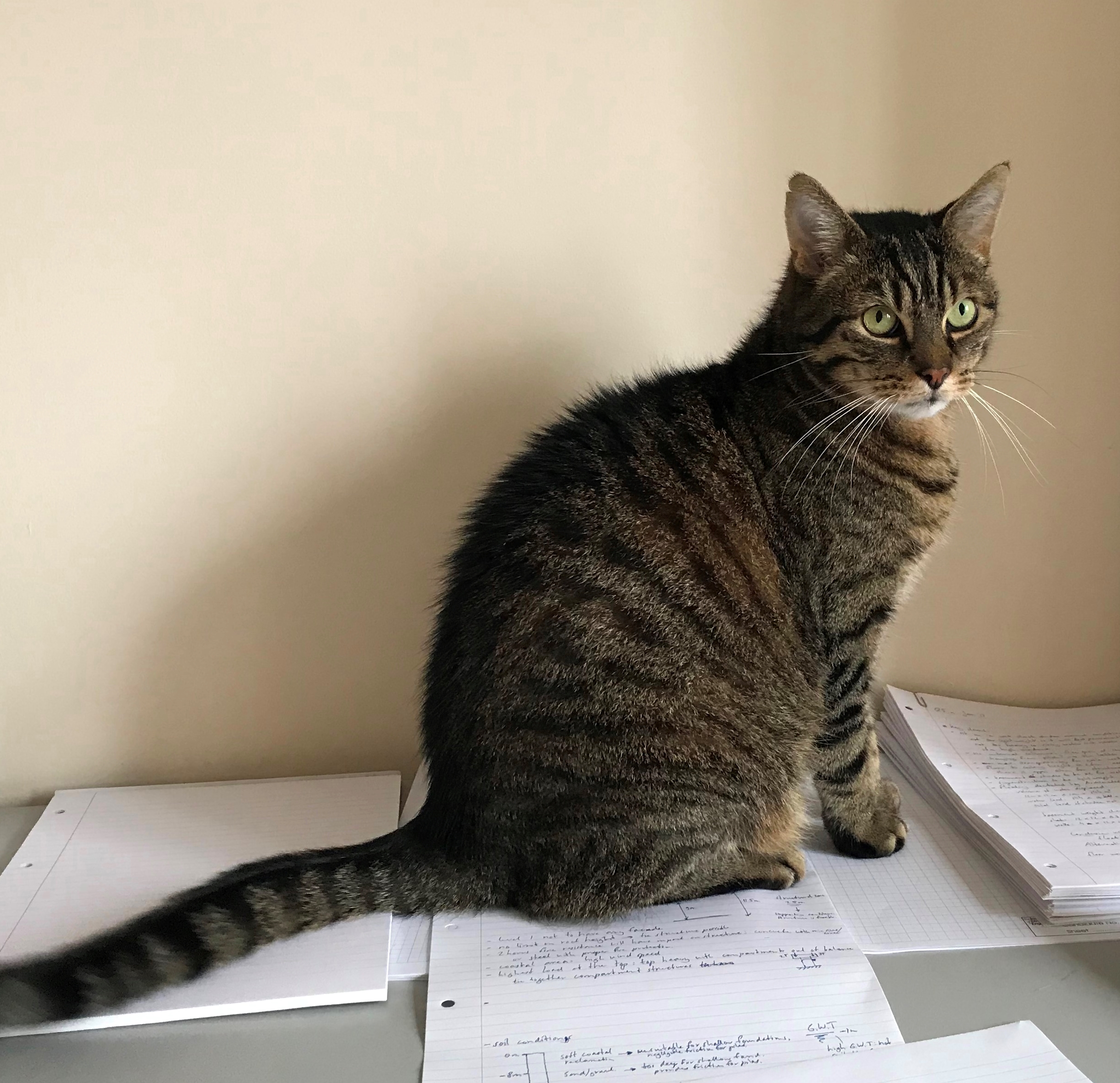
Dirk making sure I’m… not working

20180612_124018


Luckily, Vicky Halls has posted some advice on International Cat Care’s website about how to work from home with your cat.

How your cat responds to you being at home depends on their personality and their relationship with you – some will look slightly perplexed, if anything at all, and get on with exactly what they do when you’re not there. In which case, you can breathe a sigh of relief and know this information is not for you. Others however, particularly those that are really affectionate and demanding when you are normally at home, will see this as a great opportunity to use you in all kinds of entertaining ways. If this describes your cat… then click here to continue reading Vicky’s advice.

The most important thing is to try to maintain as many routines as possible: feeding time, playtime and normal mornings and evenings. It’s therefore only the bit in the middle, when you don’t leave the house at the usual time, that will feel different. Make sure you find a place to work where your cat doesn’t spend too much time. If you are very lucky and have been suitably quiet, your cat will not have noticed that you are still at home and leave you in peace. This may only be successful until you are desperate for a cup of tea or have to take part in a conference call, at which point your cover is blown. Once your cat establishes where you are, the games begin so read this sequence of events with care, it may happen to you.

1.   The obvious first strategy will be for your cat to jump onto your lap, look lovingly at you and miaow faintly to demonstrate his level of hunger and desire for food. Be strong, remember that cats are described as ‘opportunistic feeders’ and this is an ideal time to be ‘opportunistic’ and get something tasty. Your cat is actually not starving and resisting at this stage is not an act of rejection, neither will it look like you don’t love him so just ignore this as best you can. Well done, you have passed the first hurdle and your cat will now be leaving the room with an audible ‘huff’.

2.   Sadly, this peace won’t last for long, after having left the room for about 30 seconds, your cat is back and has jumped on whatever surface you are using as a desk. There is a lot of frenzied purring interspersed with more miaowing, noticeably louder than the previous ones when your cat was apparently too weak from hunger to ‘talk’ properly. Your cat now starts rubbing his face backwards and forwards on your hands as you try desperately to type on your keyboard. Every part of you wants to stop typing and give your cat some loving. THIS WOULD BE A MISTAKE! Instead, if you want to get any work done at all while you are home, you need to show your cat that this is not the time or the place. You are now typing nonsense but keep going as you can always delete it all when your cat eventually gives up.

3.   Your cat regroups briefly but the third attempt to get your attention has to have impact so he will be trying harder. You may at this stage get a full body flop onto your keyboard (your hands may still be on the keys at this point and therefore temporarily trapped), a flicking tail and a bottom backing menacingly towards your nose or a set of claws dragged slowly and ever so slightly uncomfortably down the side of your face. Stand firm! Focus on the screen, say nothing, pretend you are in the office and your cat is sleeping soundly at home. This is just a dream.

4.   If you are very lucky (and truly want this to work) your cat will sit down beside you and start to stare really hard in your direction. You are nearly there, you can do this. Do not under any circumstances look at your cat, even if you can feel his eyes burning into your right cheek.

5.   Time is passing, it feels like hours but in reality, it’s probably only been a minute but as far as you can tell no further strategies are forthcoming from your cat. This is going well, you have managed to delete your cat’s contribution to your work and you are back on track. You are beginning to ignore your cat’s stare, you are in the zone and working just like you were in the office. Your cat is behaving impeccably, no messing about, no attention-seeking and you are thinking ‘what’s so hard about this? You just need to show them who’s boss!’. You notice out of the corner of your eye that your cat has stood up and, after a stretch and a yawn, he very calmly and deliberately walks across in front of you treading on the ‘off’ key as he goes. Never under-estimate the ability of the cat to have the last word.

Good luck everyone.

Keeping an eye on Dirk with the Ezviz C1C camera

I’m sure most cat owners wonder what their cats get up to when they are home alone. I certainly do! Sometimes I find evidence he’s been playing as there are toys all over the room, other days I find no evidence of any activity whatsoever, apart from eating 😉

For everyone who is tempted to get a camera to keep an eye on their cats, I can recommend the Ezviz C1C camera. I tested version with the 1080 pixel camera (they also have version with a 720 pixel camera) which gives you a 130 degree view and super sharp images!

I won’t get into too much technical detail, you can find those here. Instead, let me tell you about my experience with the camera and why I think it could be useful – as well as fun – for cat owners. And for UK stockists please click here

Set up of the camera and the app is really very easy and after that you can place the camera wherever you want. It has a long cable and also comes with a magnetic mounting kit, which make it easy to fix to a wall, bookcase, cupboard or the ceiling. Once you’ve done that, the fun can begin!

Being a novice with this type of cameras, I was really amazed by how sharp the video is and how much of the room you can see. In fact, I cropped some of the images for privacy reason 😉
The app is very user friendly and I found it very intuitive to use.

With this camera you can also talk to your cat. This is more fun for us than for the cat I image… The first few times I did this Dirk was intrigued and went over to check out the camera. However, after a few times he only moved his head or ignored it altogether. So it’s a fun feature, but after testing it a few times I no longer really use it. This feature is more useful if you’d use the camera to talk to people as it is a two-way feature.

For me, I found it fun to use this camera and that is a good enough reason in itself! If you want to know how your cat is doing while you’re at work you open the app to look at the live feed. If he’s not active at the moment, but has been active while you weren’t looking then you can have a look at the video clips that have been saved. And the camera automatically goes to infrared night vision when there’s little light. Even in night vision mode the images are very sharp.

Those are just a few examples of cases is which having a camera may be useful. Let’s be honest, for the most part it is fun. We all love seeing pictures or videos of our pets when we are away, we wonder what they get up to and most of us really miss them when we’re not home. I loved watching Dirk have his crazy 5 minutes on camera. For the most part though, it just confirmed that Dirk is basically asleep between 9am and 4 pm 😉

Giving your cat pills

As a cat sitter I regularly need to give pills to my clients’ cats. Some cats have a reputation for spitting out the pills even when they have seemingly swallowed it. They walk away and when you walk over to see them a few minutes later there’s a pill on the floor. Other cats are very relaxed about it: they just eat a pill when it’s mixed in with their food (dry or wet) or hidden inside a treat.

And then there’s my own cat…. He’s generally placid, as those of you who regularly read about Dirk will know, but try giving him worm treatment…. You can hide it in his wet food (which he only gets as a treat) and he won’t touch it. He won’t even eat it if I crush the pill into a very fine powder and then mix it into his food – which works fine with his fibre supplement. I brush his teeth so he is quite used to me restraining him, opening his jaw and putting a toothbrush in his mouth so that can’t really be it either.

In fairness to Dirk – or perhaps just to make myself feel better – I blame the size of the pills. He needs XL sized worm tablets as he is over 4kg. Or perhaps it is the smell and/or taste because breaking the pills into two doesn’t help much either. Maybe this is his one act of defiance, his one thing to show me he’s still a wild cat at heart 🙂

Because Dirk is such a tricky customer when it comes to worm treatment I have tried a lot of things! Everything works once; second time I try it Dirk is having none of it. However, these might work for you so here’s what I’ve tried so far.

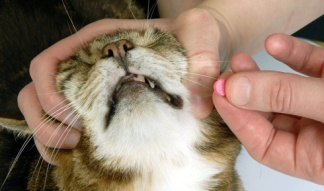
My husband restrained Dirk anrestraind I tilted his head back just as is shown in the video on International Cat Care’s website. I put the pill inside and then released my grip on his head but kept his mouth closed. What happened next? Foaming at the mouth, angry growling noises, he was doing everything he could to escape. I was afraid that I’d hurt him because I saw blood in his mouth only to discover that is was MY blood because he’d bitten my fingers! It started with all of us being calm and I was gently reassuring Dirk that everything was going to be all right but it ended with everyone being upset and the pill on the floor.
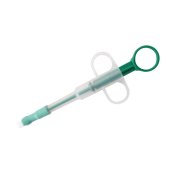
popperThe pill popper was a promising idea. My fingers wouldn’t need to go inside Dirk’s mouth and you can put the popper in the back of the throat so the cat is more likely to swallow it whole. The vet showed me how to do it and it worked. However, the warning signs were there as Dirk had the most angry look on his face afterwards. Needless to say it didn’t work when we tried it at home a few months later.

pocket

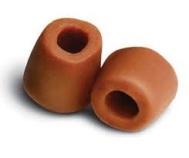
Next we tried the pill pocket. I’ve been using this quite a lot with clients’ cats so I was optimistic. I broke the pill into two halves and put each half inside a pocket. I first gave Dirk an empty pocket so he could taste it and see it as a treat. He loved it! I was a bit worried he’d smell the pill inside, but he ate the first pocket with half a pill inside without problems. Great! Except he then refused to eat the second half.
Back to the vet for more ideas.

paste
The vet nurse recommended a sort of paste. She said it had made her life so much easier as she sometimes was the only one on shift and needed to administer pills by herself. Just warm the paste in your hand and them wrap it around the pill and the cat will happily eat it. Well true enough, Dirk happily ate it…. Just the once. Now he won’t even eat the paste itself.


As Dirk is an indoor only cat we’ve resorted to the vet giving him his worm treatment during his check-ups. Dirk goes every 6 months because he’s getting a bit older so now he gets worm treatment twice a year. Not ideal, but we keep his flea treatment up to date so the vet is OK with this worm treatment regime.

From the Life of a Cat Sitter

Besides being a cat behaviourist I work as a cat sitter as well.

People ask me whether I just feed and clean litter trays all day. Well, yes and no. I mean I do feed cats and clean litter trays, but there’s much more to it.
In this series of posts I share some anecdotes from my life as a cat sitter. I promise these stories are all true, though the cat’s names have sometimes been changed to protect their identity 😉

Today: a few ‘golden oldies’

Older cats often have special needs. Many of them suffer from arthritis but they can have a history of other illnesses too, most notably kidney disease. Some of them have dementia: they forget why they walked into a room, they forget they already ate their food, they forget where you are or what time it is and meow loudly in the middle of the night. It can help to buy a timed feeder so your cat gets more smaller meals a day rather than 2 main meals (don’t forget the night feed or they will still wake you). It also helps to give them multiple warm places to sleep. And don’t forget to play with them: cats remain playful throughout their life. You may want to change the type of games and forego jumping games, but they still like playing with laser pointers or chase or kick toys. Don’t play for too long, short and frequent is better for them.

And if you think older cats are never mischievous then think again…. Thom is a perfect example! He’s a gorgeous 13 year old boy with a history of liver problems. I’ve been visiting him for a few days now and he always comes inside as soon as he hears me. Either that or he is already home and asleep on the sofa.

Billy
When I come I notice something strange lying on the kitchen floor. ‘What on earth has the cat dragged in?’ is going through my mind. I walk closer and somehow it looks like raw chicken?? Did he go through any of the neighbours’ bins? Well… no…. Thom has found a way to open the freezer and made a hole in the bag with chicken thighs. He’s eaten the skin and left the rest. He’s sitting in the kitchen grooming himself and looking rather pleased with himself…

My next cat is 20180819_183835a lovely old boy named Mr. Biscuits. He was 11 years old when his owners adopted him. Rehoming an older cat is very rewarding. Older cats are often overlooked in shelters and have more medical needs than younger cats. Mr. Biscuits is no exception: he has hyperthyroidism and chronic kidney disease and needs medication twice a day.
He loves the company and sitting with me. But he’s not ready to just sit behind the window: his owners take him ‘walkies’ in the park!
If you’re thinking of getting an older cat or already have one and would like more information, please click here.

How to take care of cats with kidney disease

* Originally written by me for citikiti.co.uk

From the ICatCare Conference

Chronic kidney disease is a common disease that affects over 30-40% of cats over 10 years old. This percentage is even higher in cats that are 15 years or older. Although the average lifespan of cats is roughly 12-14 years, more and more cats are now living beyond the age of 15 years (which roughly equates to a human age of 76).

My own cat is somewhere between 9-11 years old now – he is a rescue cat so we don’t know his exact age and I know a lot of your cats are over 10 years old. As our cats enter into the senior stage of their life they are more prone to many diseases, chronic kidney disease being one of the most prevalent examples.

There is no cure for chronic kidney disease, but we can slow down the progression of the disease and cats with chronic kidney disease can still have a good quality of life.

Before discussing how we can help cats with kidney disease, let’s first briefly look at the most common symptoms of kidney disease: increased drinking and urination, reduced appetite, weight loss and lethargy. You may also notice vomiting or a bad breath.
Chronic kidney disease is diagnosed through an analysis of blood and urine samples. The earlier the diagnosis, the better the prospects are of preventing further kidney injury, managing the complications and slowing the progression of the disease.

If your cat has kidney disease then your vet will discuss a plan of action with you. This will depend on the stage of progression of the disease and your cat’s specific complications. Treatment of chronic kidney disease will mainly focus on feeding your cat a specific type of diet as this is the only type of treatment we currently have that prolongs life in cats with chronic kidney disease.
What else can we do at home to make sure our cats are comfortable?

Make sure your cat is drinking plenty of water. Find out what your cat prefers. This could be drinking from a running tap or the shower, a water fountain or providing a different type of water bowl (most cats like drinking from a wide brimmed ceramic bowl. If your cat goes outside, put a ceramic bowl in the garden: quite a few cats prefer rainwater over tap water.

As cats with chronic kidney disease tend to urinate more often it is good to make sure you have multiple litter trays in various quiet places around the house. Some cats refuse to use a litter tray that isn’t clean. If you have multiple trays then your cat has multiple appropriate options when you’re at work.

And last, but not least: make sure their lives are as happy & stress-free as possible. Give your cat warm, comfortable places to hide & rest and engage with them: play with them, groom them, stroke them, etc. Remember though, you ill cat is still a cat and wants to be in charge of his life as much as possible: let him initiate the quantity and quality of your interaction and don’t overwhelm them with love

For more information about kidney disease in cats see International Cat Care’s website.