Many owners buy things for their cat and then their cat doesn’t use them! Cat beds are one such example. How do you know if your cat will decide to use it? Cats often prefer to sleep in elevated places, so position of the cat bed can make a difference. Not all cats sleep in their bed when it is on the floor, but you will increase the chances of your cat using it if you place it on top of a dresser, for example. They also enjoy igloo style beds as this increases their sense of security.
Another thing many cats absolutely love is sheepskin! A small sheepskin rug is a very nice, warm and comfortable bed. And it is flexible too, in the sense that you can put it where you like. You can leave it on the floor or sofa during the day and next to your bed, on your bed or the dresser at night. This means you won’t need many cat beds, just the one rug that you leave in one place or move around the home depending on where you want your cats to spend the night.
Building a cat tower requires doing some research and understanding your cat’s behaviour. It’s not an easy task. In fact, there may be instances where you build one, only to tear it down after you’ve seen how your cat is using it.
Here are some tips for building the best cat tower for your pet.
1. Research
It’s always a good idea to do some research on any project that you set your eyes on. Take some pictures, analyse reviews and talk to cat owners who own towers to gain some insight and advice. By researching, you can find design inspirations, determine which colours to use, and identify which structures you can add. The best cat trees are those that take your cat’s needs and behaviour into account, and also complement your home’s interior décor.
2. Determine The Size Of Your Home
One of the most important factors when making your decision to build a cat tower is the size of your home. You need to determine how big your walls are, how tall the trees surrounding you are, as well as the buildings around you. If you build a tower that’s too small relative to your space, your cat may be more interested in climbing taller and bigger objects. If the tower is too large compared to your space, you may feel cramped up in your space, considering it will share space with your furniture. Articles that discuss pet guides and product reviews can give you more insight into these essential considerations.
3. Determine The Tower Structure
Cat towers and houses are available in a variety of sizes. Some pet owners prefer to build them in tandem with a cat fence so that the cats will have a place to go to relieve themselves.
Most cats like to climb objects, which means that the structure you’re building needs to be tall enough for your cat to climb up and down comfortably. Your cat shouldn’t need to jump from one level to another, but the tower should help your feline companion improve their climbing skills. It is a good way to teach them to trust their paws and not use their claws when trying to climb.
4. Tower Material
The material used to build the tower can determine whether your cat will enjoy the tower. Materials such as rope, reed and thatch may be irritating for some cats because their claws get stuck in the material. Other materials used to make cat towers include wood which may be wrapped in cloth. Stay away from certain fabrics like cotton, because they may quickly become torn by the constant movement of your cat.
5. Consider The Size Of Your Cat
The best cat tower is one that can effortlessly hold your cat’s weight. You don’t want your cat to topple over or for the tower to give in to the weight. This can hurt your cat as well as the space in which the tower stood. Make sure to use a material that’s strong enough to hold your cat to avoid potentially dangerous scenarios.
6. Preferred Tower Location
Where you decide to place your cat tower is largely determined by your cat’s preferred location in the house. Some cats enjoy spending time with others in the lounge area, while others seem to prefer a quiet window corner. You may decide to place a tower where you’d prefer to see your cat, but if your cat hardly spends time in your preferred locations, then he or she may not fully enjoy the tower.
7. Rebuild
If you realise that your first attempt didn’t come out as intended, don’t be shy to dismantle and rebuild. Perhaps you’ll notice that it’s wobbly when your cat is on it, though it may appear steady. You may also notice that your cat struggles to navigate the tower because they’re too big for the tower. You simply have to observe your cat and fix the tower accordingly.
Conclusion
Before building your cat tower, you need to do some research. Gather design inspirations and building tips online. Consider the size of your home, your cat’s behaviour, and the size of the tower. Place the tower in a space that your cat enjoys. If you realise that there’s something wrong with the tower, you can always dismantle and rebuild. Wobbly towers or ones that are too small for your particular cat can cause dangerous scenarios where your cat may fall or knock the tower over. Also consider the type of material that you use to build the tower.
I was at the London Cat Show in 2019 and they had a cat agility section, much like dogs do at Crufts. Obviously, I was intrigued and curious to see how (or actually whether) the cats would perform. They did much as I expected: not so well. I have no doubt that all cats in the agility section are actually really good at doing the agility course, but cats do not perform well in front of an audience, under pressure, or with an unfamiliar trainer.
You can train cats to do tricks on command: Dirk has mastered giving paw. And not just that: if I know once it means right paw, two quick knocks means left paw. In return, because there has to be something in it for him, he gets a treat, but only if he gives my the correct paw and does not use his nails…
It is actually a lot of fun to train your cat. You build a way of communicating and interacting with them that is rewarding for both of you. Cats learn best when they trust their trainer and feel happy in themselves and their environment. And if you want to show off to friends and family it’s best to film their performance rather than rely on a live performance on the day.
As a cat owner few things are more annoying then your cat not using their scratching post but instead scratching your bed, sofa, carpet, wallpaper or really anything BUT the scratching post! I know all about it, because Dirk and I went through quite a few climbing trees and scratch boards until we finally found some options that we are both happy with. Dirk was fairly persistent in his sofa, chairs, carpet and bed scratching behaviour, but we’ve now mostly tackled the issue (although he does still scratch the bed in the morning as a means to get me to feed him).
The first scratching tree I got Dirk was a fairly small one and not all that sturdy. He is a big cat and needed something bigger. So that’s what he got!
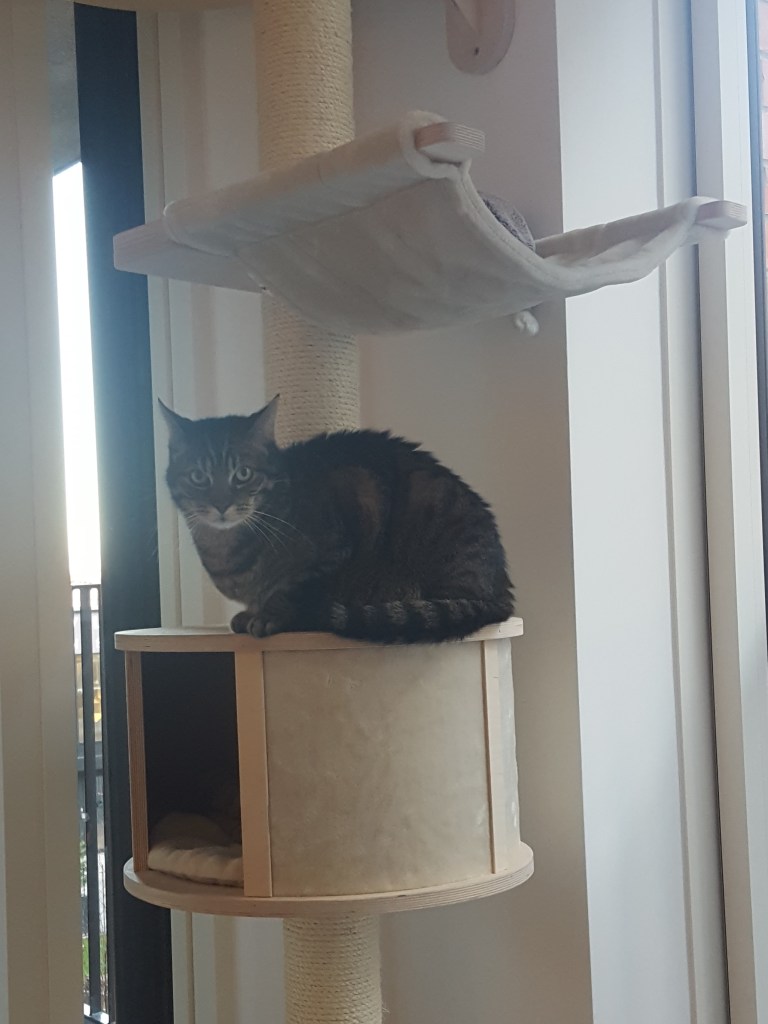
I loved this scratching barrel, it looked very sleek and had levels inside so Dirk could climb inside and hide. Dirk loved sleeping in it, but hardly ever used it as a scratching post. He still used the carpets, sofa and chairs instead…
I figured he might like some horizontal scratching surfaces as well as some thinner scratching posts. In came the scratching pads and sisal poles, but with limited success. Dirk used them, but rather in addition to his other “scratching posts” (by now you know which ones I mean).
I don’t give up that easily though and realised that part of the appeal when scratching carpets and sofa was the fact he was destroying them: pieces of fabric came off. Perhaps he would be happier if I gave him a scratcher that he could shred?
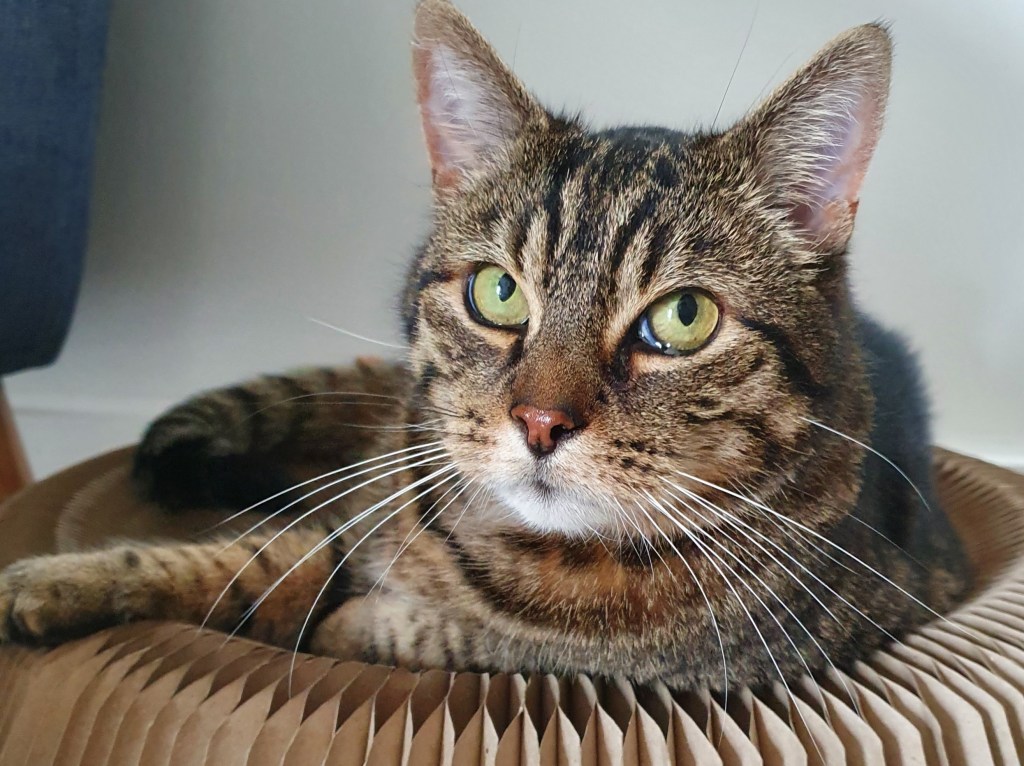
Luckily, he really likes his cardboard scratchers, both to scratch (or shred) and sleep on!
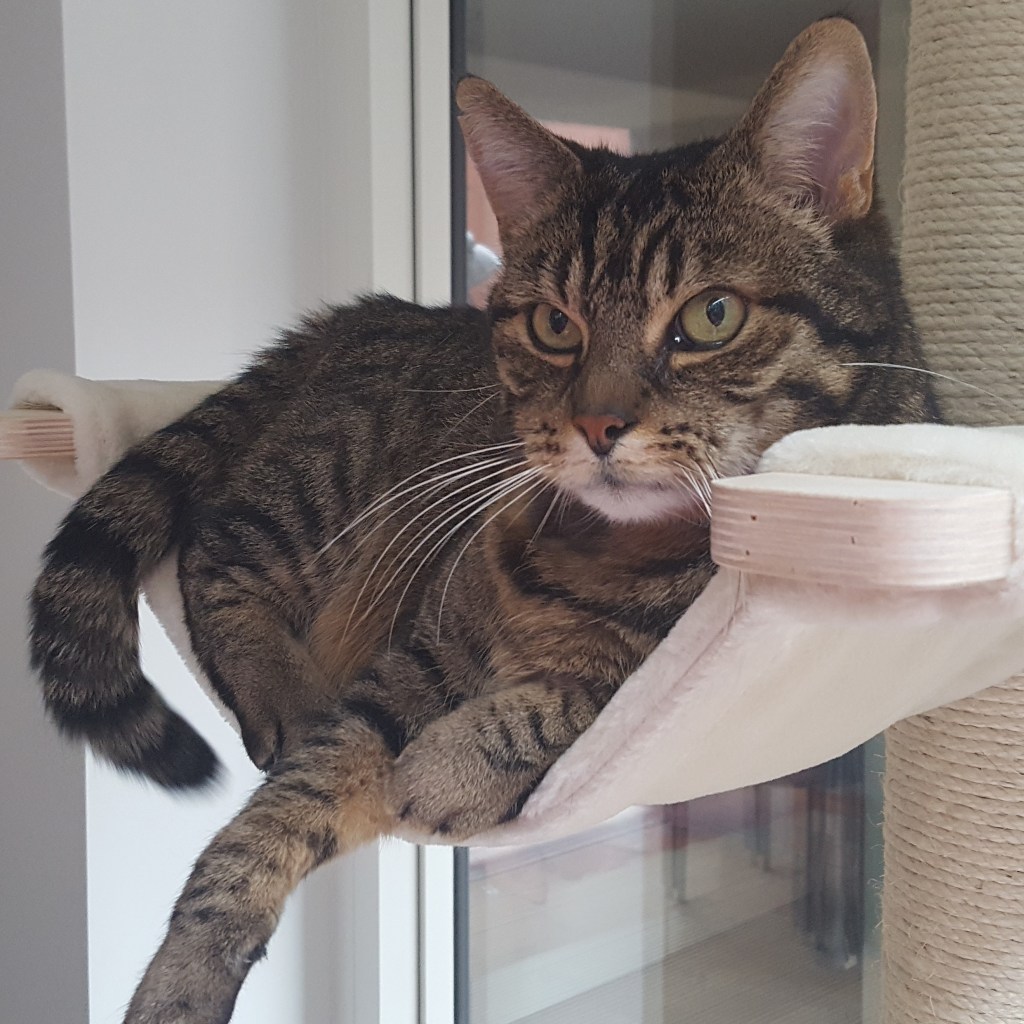
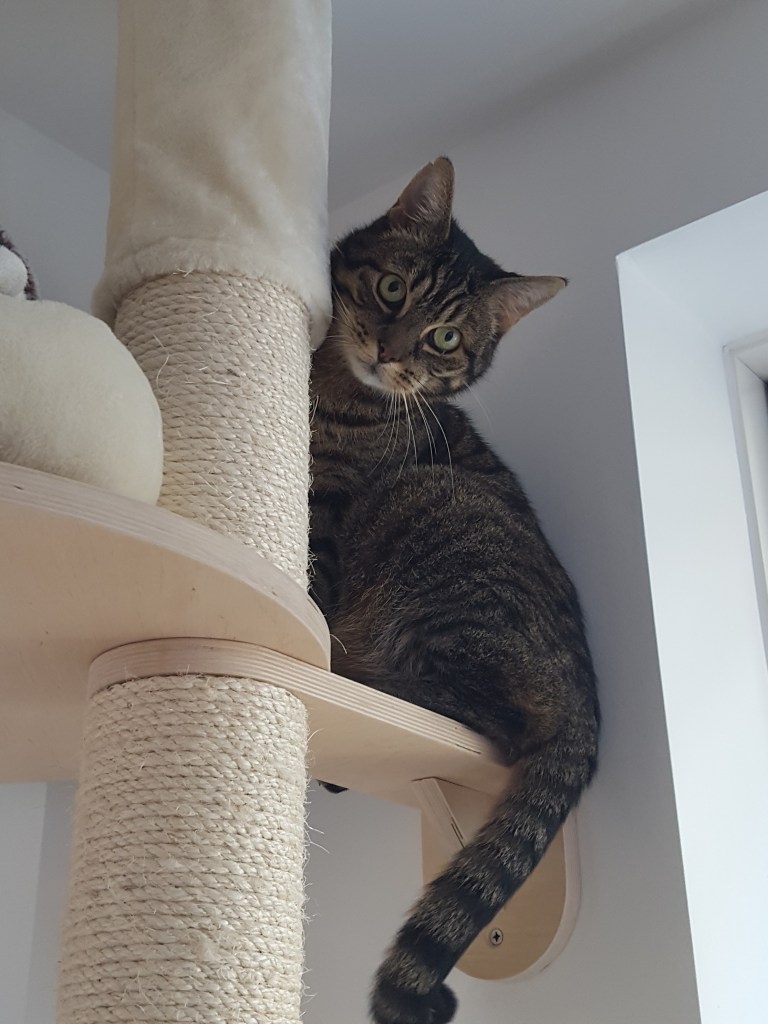
Dirk also loves the most recent addition, which is a floor to ceiling climbing tree. He actually uses it to scratch, climb and sleep and has left the sofa and chairs alone since the tree’s introduction (knock on wood).
If you want advice about which type of scratching post to choose, then check out this brilliant article by International Cat Care.
It is January again and we are all back to working from home after the Holidays.
Dirk does not really understand the difference between me being home & having time for him and me working from home (& not really having time for him whenever he likes).
Luckily, we can keep our cats entertained. If you have a garden then you probably won’t have an issue: birds will visit and your cat can keep an eye on them. Dirk loves watching birds fly past, but I have to admit we don’t have an abundance of birds flying around our flat.
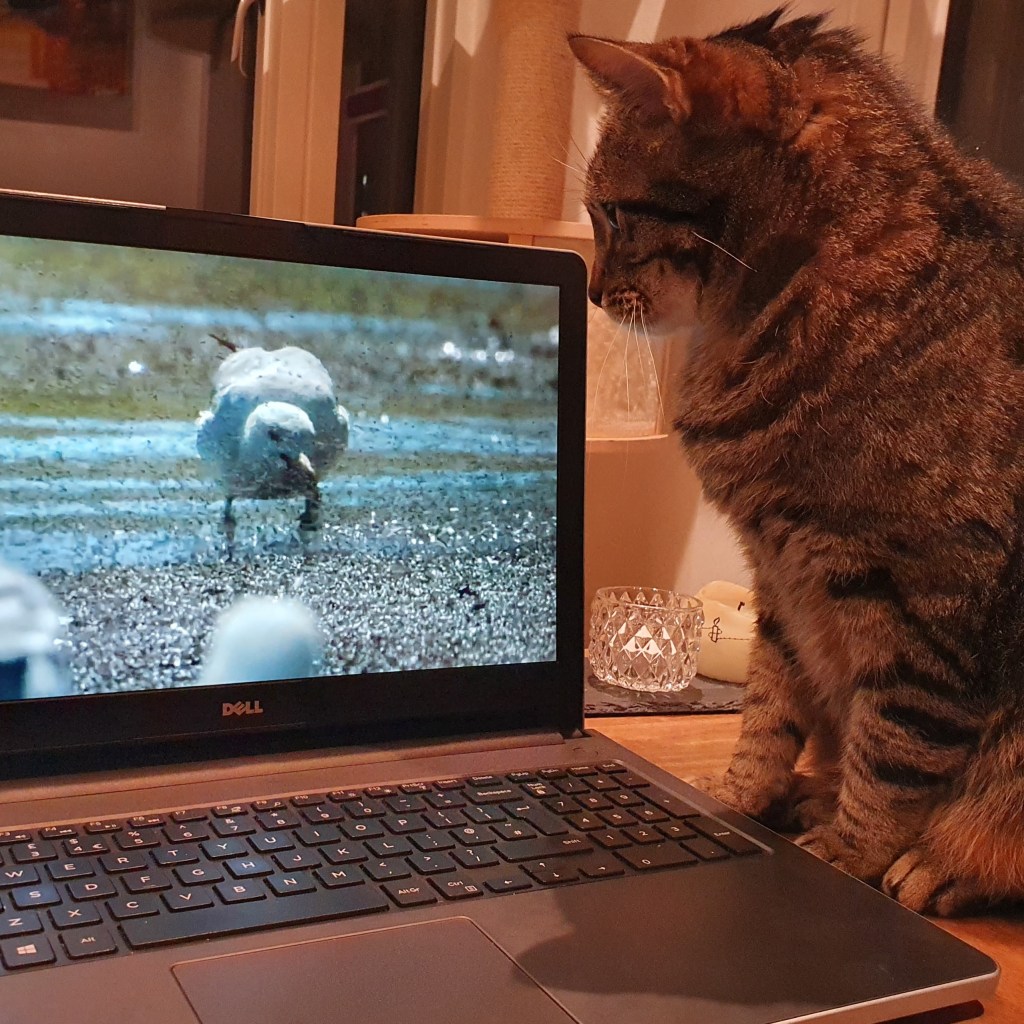
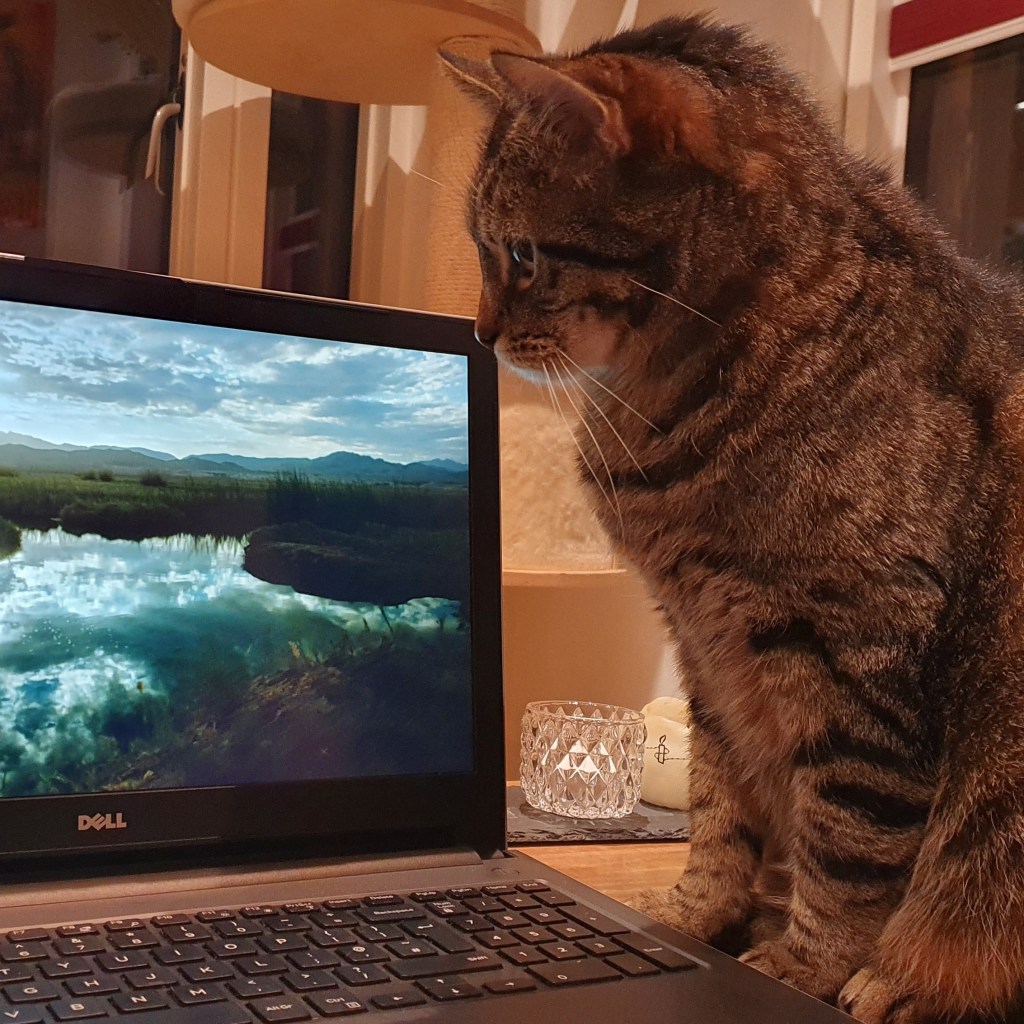
Time for the telly! Put on a TV programme (or let your cat binge-watch the entire series) with birds, insects, or other animals and this should keep your cat entertained! Watching birds is of course very tiring, but they can take a nap while hearing the birds on the telly. I wonder what they will be dreaming about…
This is for illustration purposes only. If you have to use the laptop for work then this is clearly not an ideal situation… 😉





 happycats.london